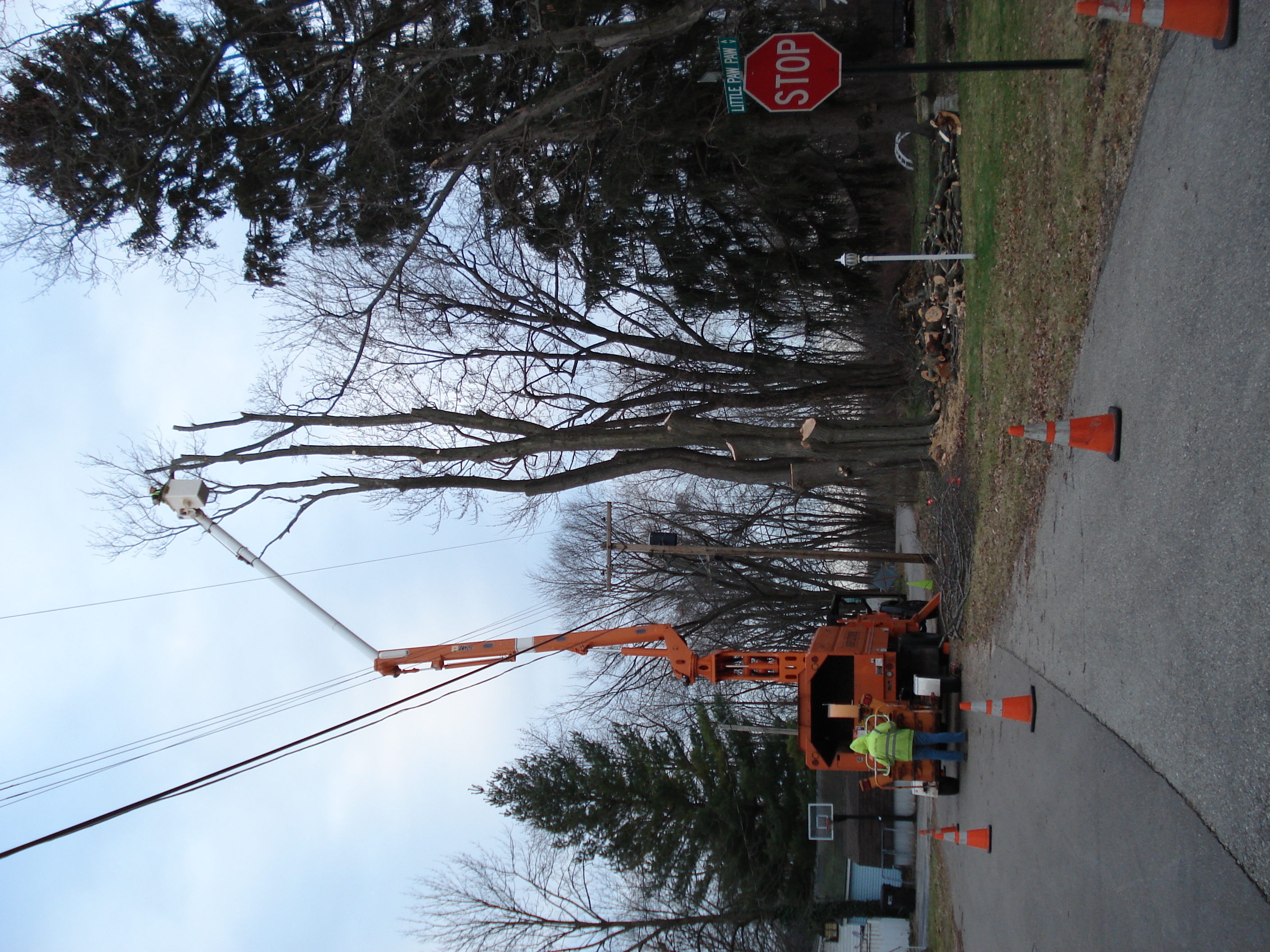
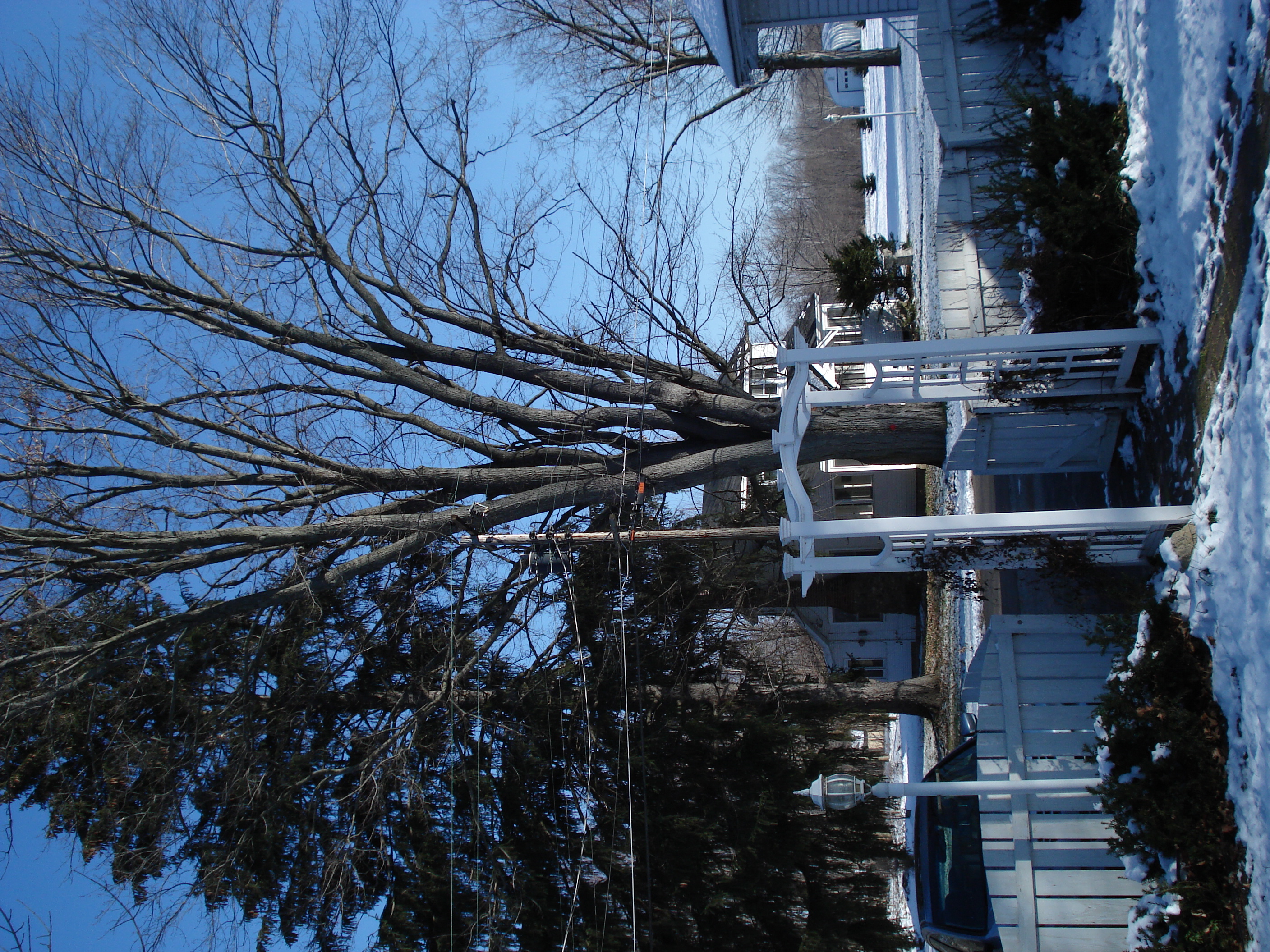
The “tree doctor’s” diagnosis of our nearly 100-year old maple’s terminal condition proved correct. The sawn trunk sections of our recently felled maple revealed a deep split from “12 o’clock to 6 o’clock” across the middle of the trunk, and a second split at “9 o’clock” that intersected the first at a right angle. One of the several main divisions of the trunk was hollow and segments of it broke on impact with the ground despite their shell of live wood. Because of the proximity of power lines and the mature pine just north of the maple the tree removal took nearly 3 days, but was accomplished without any interruption of electrical service. Nice work, tree surgeon!
Category Archives: Uncategorized
When it snows you can see – the first pines of the Bluecirclefarm!
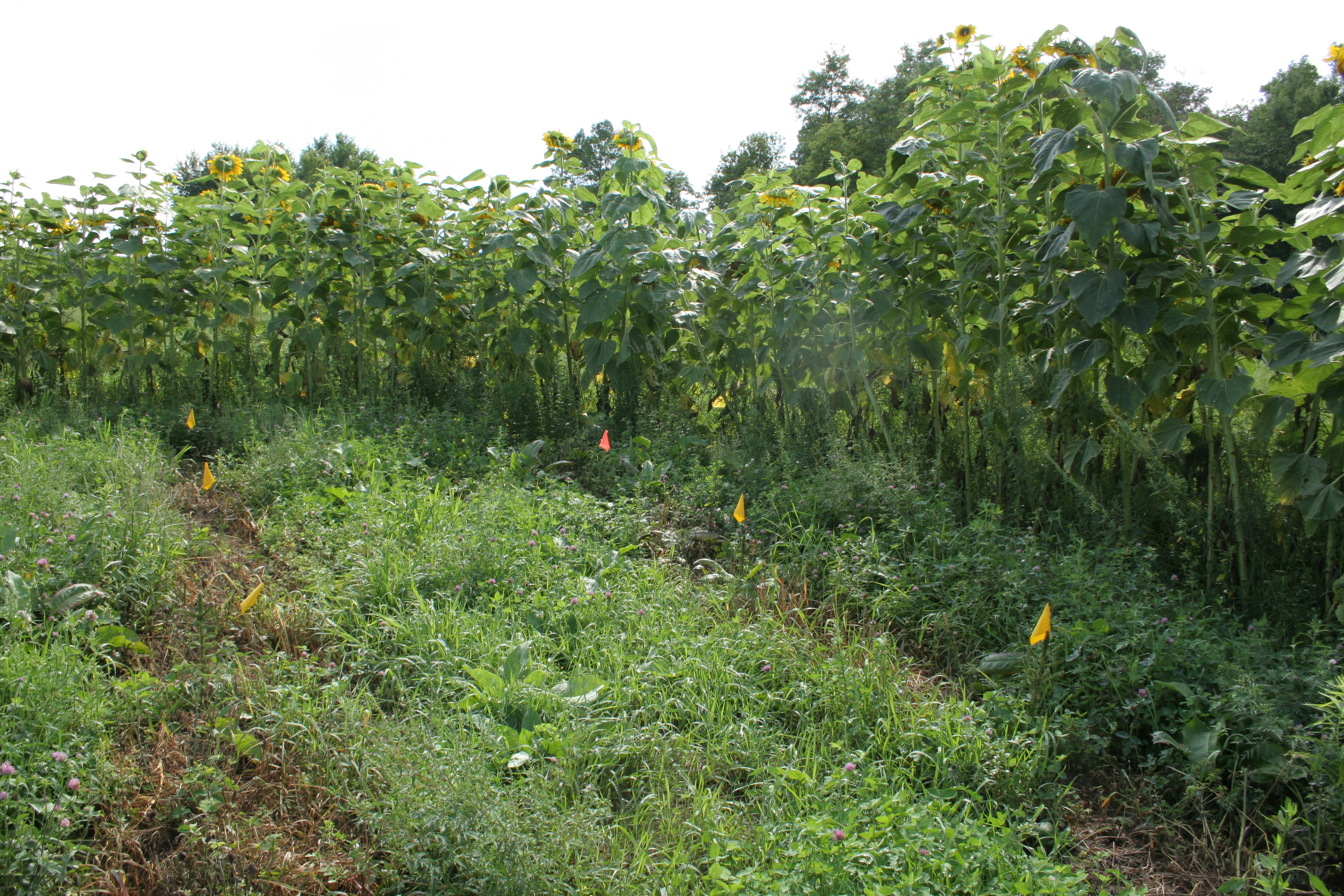
On a couple of frosty, muddy mornings in March and early April the first rows of trees planted in the Bluecircle were Douglas fir and Norway spruce seedlings from Burgess Seed Co. and the Berrien County Conservation District. The summer was relatively wet, and both trees and the abundant weeds prospered. Even with mowing and some cultivation it has been hard to see the trees for the ragweed, red clover, thistle and even poison ivy, but with the first snow the survivors are now visible alongside their marker flags. Overall about 85% of the 160 seedlings made it through their first growth season, which was better than I expected. A lessons-learned note about poison ivy in the Spring – bared-handed planting in March is to be avoided even when your gloves are wet unless you don’t mind following up with 2 weeks of treatment for the ivy rash! A tree spade works just as well and doesn’t mind the cold.
Wind (too much) in the treetops
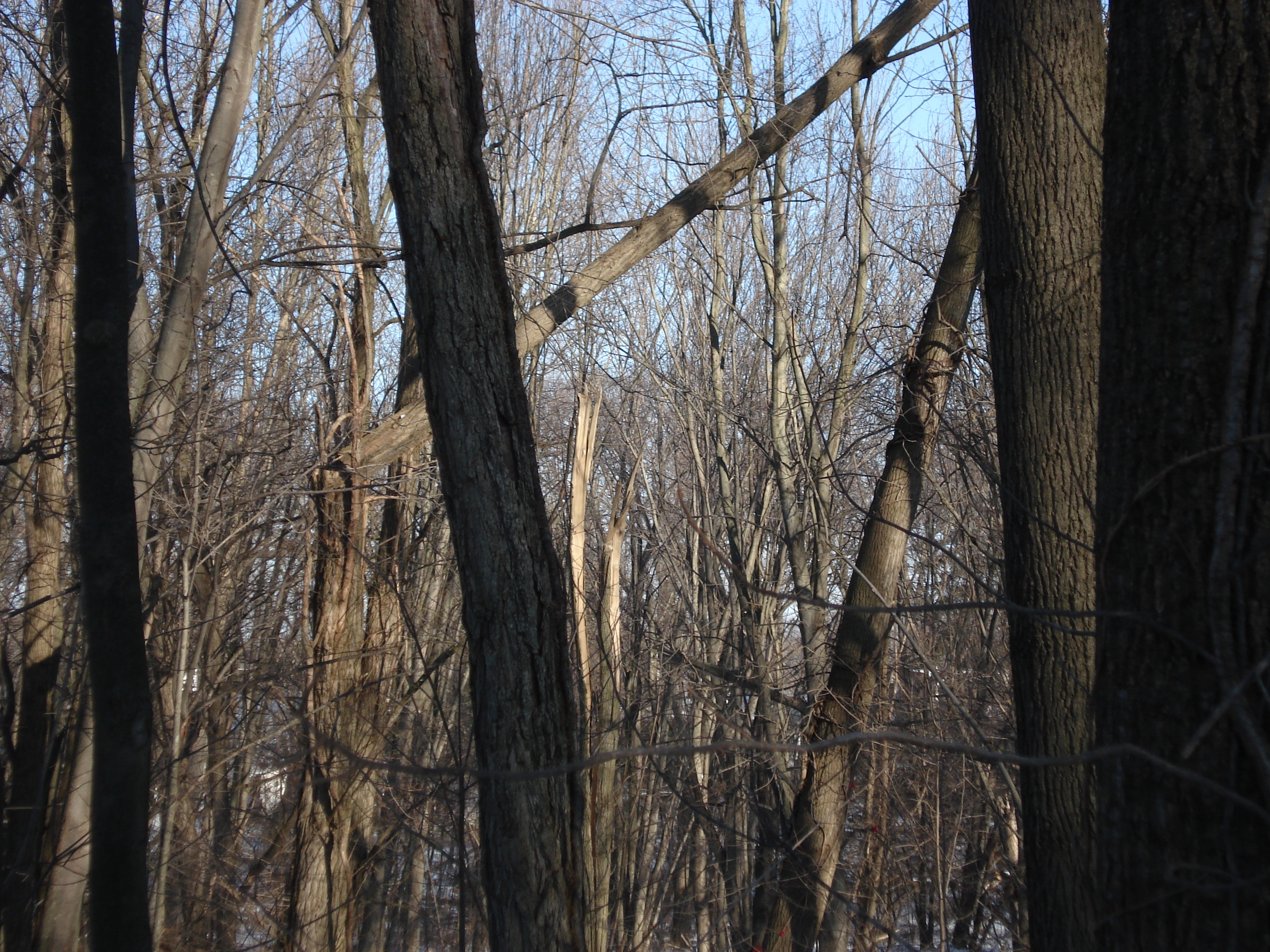
Now that the leaves are down the full extent of damage to the mature trees around the Bluecircle is apparent. Trees between the lake and top of the hill had the least protection from storm winds blowing from the northwest and many tall, but relatively young tulip poplars with 8-10 inch trunks were damaged. Brittle honey locust and soft maples were pruned wherever they grew. Some will survive, and others will need to be removed once the ground is frozen. Sadly an old maple, probably nearly 100 years old, has developed a large split in its main trunk and now threatens both buildings and the electrical power lines to Pomona Point. A large red spot on the trunk has marked it for removal. A few oak seedlings sprouted in its shade last summer and in the sunny space soon inherited they may mature into shade for the next generations.
Out-of-state tuition
A few weeks ago my dedicated neighbor George’s efforts to till the central part of the Bluecircle came to an abrupt halt when the rotary tiller encountered a 6″ honey locust stump. A few hours and a greasy mess later he was able to repair the broken chain drive, but collateral damage included a broken tine on the tiller. Worse yet, the gear box emits a nasty clacking and will need further diagnostics by the local repair shop. As George put it, “No matter what college you go to, you have to pay tuition”. A Google search of this phrase produces 4,120,000 hits, but it appears to be a unique bit of Chicago construction site wisdom.
We will be in the stump-removal business before any more work tilling in this area, and add the tiller repairs to lessons learned in the field. I think I may also mark the remaining stumps a bright Hoosier Red as a reminder of this entry-level course in field preparation.
OP367 poplars in October
First harvest in the Bluecircle barn
The barn door installation was just in time for a hard frost and the first birthday of the Bluecircle. More importantly, it was time to harvest the sunflower garden and getting the place enclosed was essential to keep the neighborhood raccoons from making off with the half-dried heads. The cool, damp mornings are ideal for mold growth on the sunflowers and I underestimated the size of the job – 4 full wheelbarrows even after losing some to storms and leaving smaller heads for the jays. This year we will try drying them in a large sling attached to the side of the barn and supported by posts.
Walls rise, leaves fall
The carpentry began with red chalklines snapped on the slab at the open ends of the tractor barn and ended with trim around the windows.
Including trips to local lumber yards the job took about 70 hours and now frames the opening for a door that hopefully will be installed before the first snow flurries. Steel angles anchored to the bolts of the metal roof proved to be the key to anchoring the 2×6 and 2×4 framing for this project. This step would have been easier if the distance between the bolts had matched the hole spacing in the steel, but the end result was sound walls anchored at the roof peak and corners. 
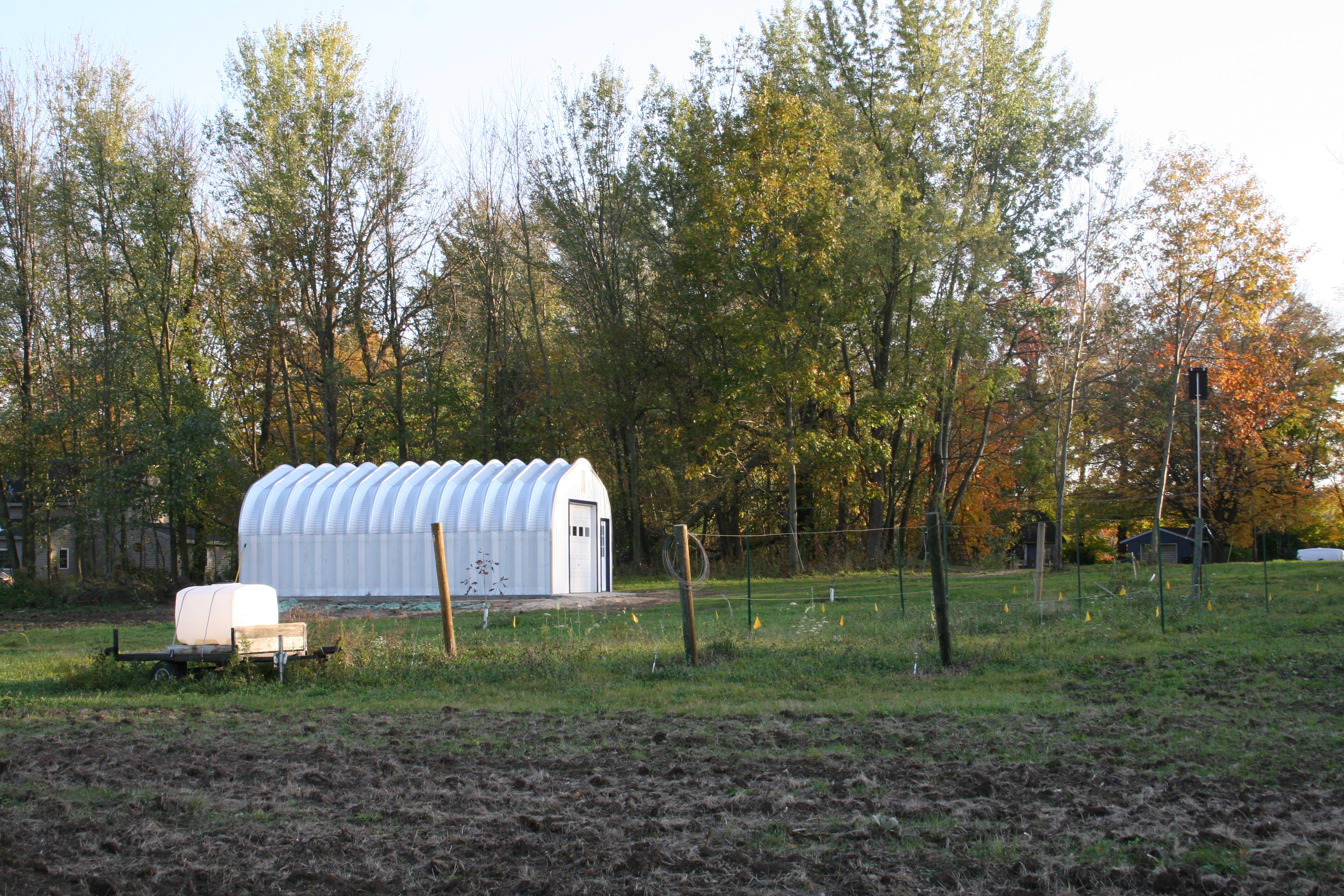
Erection Guide: a tractor barn
Stony ground at the crest of the hill that rises from North Watervliet Road may have once been the site of a barn, but so far I have not uncovered evidence of a foundation. When it was time to plan a tractor barn other sites looked more attractive since this high ground is swept by winter winds and without orchards access to the road was not needed. Our home overlooks the lake from just beyond the southwest corner of the farm, so we chose a location on the south side that would be a short walk from the breakfast table. A couple of adolescent 30-foot oak trees will eventually shade the barn and help it blend into the adjacent small woods.
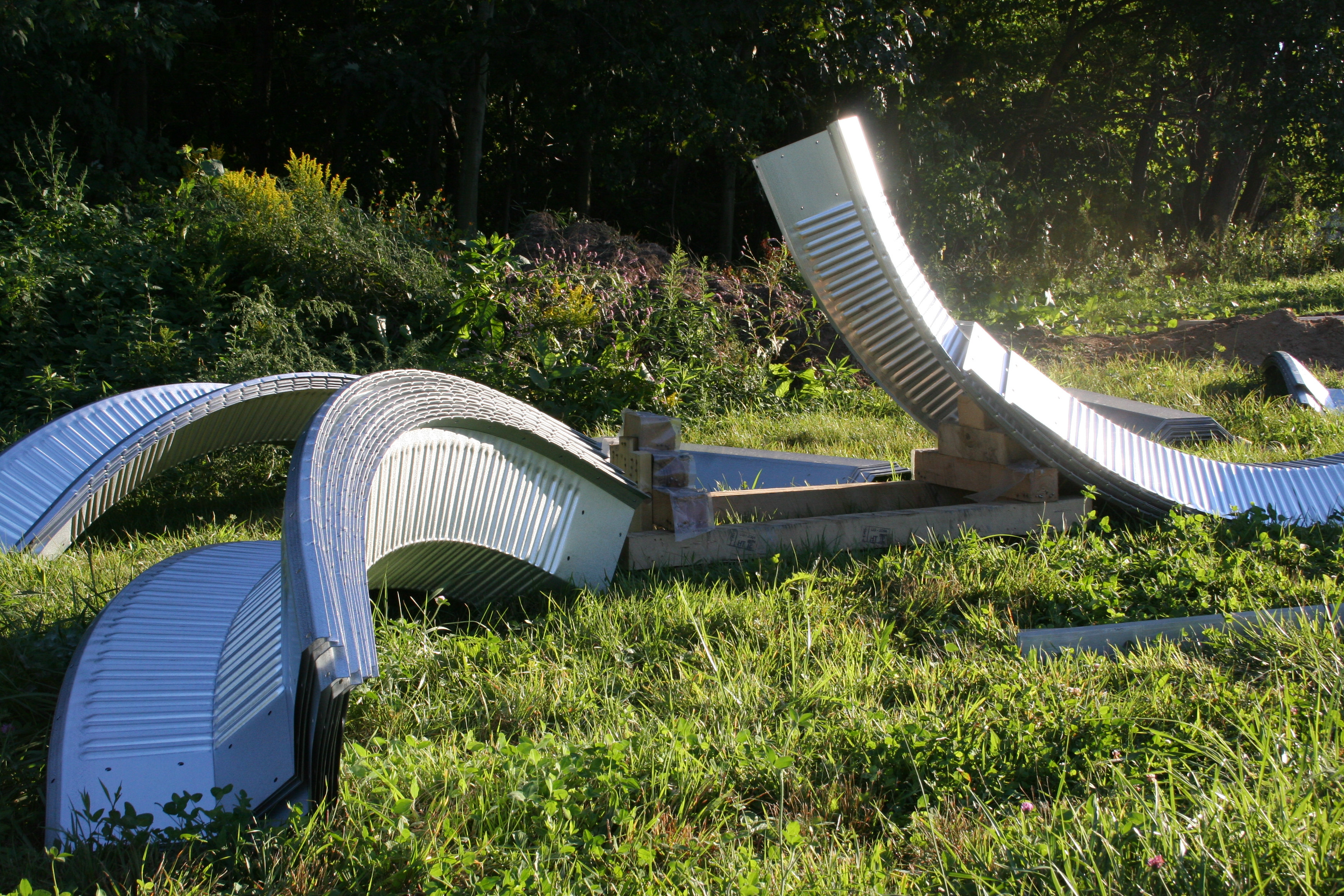
Our local building inspector provided helpful advice on the high snow load capacity (50 lbs/sq ft) required by local lake-effect snows, and in early September a flatbed truck delivered the 18-gauge steel shell of the new barn. There were immediate similarities between the building and the Erector sets I built with years ago – lots of evenly spaced bolt holes, about 60 pounds of nuts and bolts to fill them, and large angular foundation pieces. While the Erector screwdriver and wrench were not supplied, the “Erection Guide” a well-written set of construction instructions and structural drawings were. With these in hand I negotiated with Charlie Sample, an affable local builder and self-described entrepreneur (and tree lover!), to lead his crew to move sand and pour concrete.
Charlie and men efficiently built the barn’s slab. After studying my calendar, the jumble of steel in the field and the two full buckets of nuts and bolts Charlie and I renegotiated the plan and agreed they should also erect the building’s arches. About 1000 bolts and 100 hours of project labor later his progress report was “It’s done! Whew “. In medical school there is a saying: “Watch 1, do 1, teach 1″. I think Charlie has now had a chance to both watch 1 and do 1 on the same job, so should be ready to serve as instructor if anyone needs him. A website advertises that 4 salesmen for a steel building company erected one of these buildings in a weekend, or presumably in about 60 hours. They must have had a seasoned foreman!
Work continues on enclosing the ends of the barn before snow decorates the farm; there was frost on the 2 x 4s last Sunday morning so we will press on with this project.
A beginning with hybrid poplars
A few years ago the view over the crest of the hill on the north side of the farm was blocked by two large featureless storage garages built just across the property line. This part of the farm was a perfect site for some fast-growing trees. Cottonwood thrives as a native tree here so the closely-related hybrid poplar seemed like a good choice. We ordered enough hybrid poplars from the Berrien County Conservation District April tree sale to plant a couple of barrier rows, and on a cold and rainy April morning planted them as quickly as possible. There was no need to water them in the soggy, freshly tilled ground.
During winter evenings of web reading I had discovered “Forest-in-a-box”, a kit of 100 dormant poplar cuttings advertised (hybridpoplars.com) as a practical way to get started in poplar growing. When the kit arrived it contained rubber-banded bundles of 2-inch sticks about the size of broken pencils, growing bags, labels, and trays to hold the bags once they were filled with planting soil (fertilizer-free). Dipping the “hybrid OP367″ cuttings in rooting hormone and planting them was an evenings work, and within a few weeks a leaf or two had sprouted from all but 3 or 4. In mid-April we moved the trays to a neighbor’s outside porch to harden them against the cold. Two weekends later each 2-4-inch “tree” was teased from its nursery bag and into a hole created with a planting bar. The race between the Conservation District poplars and the OP367 cuttings was on.
Regular rains and a few windy storms have made it relatively easy to care for the poplars this first summer. Although there was nearly a 2 foot difference in height between the bare root and the bag-rooted trees when they were planted by the end of August they were almost indistinguishable. The tallest poplars are about 5 feet tall, and off to an excellent start.
Seven tractor lessons
My first year of tractor use has brought experiences worth remembering as well as a few I’d like to forget. The deep parallel furrows and scattered remnants of black plastic mulch left on most of the Bluecircle land are reminders of the years it was used to raise tomatoes and perhaps squash or similar vegetables. Accordingly, a slick red 38-horsepower McCormick tractor with 4-wheel drive, a front loader bucket and brush mower were among the first tools on the inventory of the new farm.
The furrows demand slow travel from place to place on the hill, but this reveals field mice, rabbits, snakes, and reluctant groundhogs and allows them plenty of time to get out of the way. The tractor’s combination of a clutch, 4 separate shift levers and both hand and foot throttles contrasts with the “steer and go” of our SUVs and makes driving a skill again. During its the first 100 hours of operation the McCormick diesel has been trouble-free, starting easily whether moving snow or in August heat. Every month there’s been a new use for the front loader, and new respect for the skills of construction equipment operators.
I learned to respect April mud when it and the tractor’s weight threatened to “sink the Bismark”. Fortunately a combination of 4-wheel drive, the front bucket, sand and some old-fashioned shovel work got us out of this predicament. The same tire treads that helped out in this situation created trouble later. After a heavy rain a shortcut over the lawn left deep footprints – months later the turf was still in recovery. The lesson here, that the McCormick is “just not a big lawn tractor”, was repeated the day George and I decided to change its 6+ gallons of oil in the garage. A shallow plastic tub for cement mixing looked like a good place to drain the oil, and might have been except for the crack in one corner. As oil poured from the tractor into the tub it formed a rapidly-growing pool on the floor! Only twenty pounds of kitty litter kept the entire floor from flooding with tired oil.
This entry would not be complete without acknowledging the mentoring and support of my neighbor George, whose substantial wisdom and experience with equipment are matched by his willingness to share the fun and work of using and maintaining the Bluecircle tractor.