Cedar and spruce seedlings are thirsty their first few months, so keeping track of local rainfall is a requirement this time of year. When Nature doesn’t provide the only alternative is the “water wagon”, a 30 gal. tank and dispensing hose strapped to the bed of our Gator. The Gator is the Bluecircle’s all-purpose “go-fer cart” (my wive wanted a golf cart & I misunderstood ), tool carrier and coffee holder.
Perhaps carrying this weather-watching to extreme, the Bluecircle now has its own weather station “East Paw Paw Lake” posting to the Wunderground family of web sites. Since just graphing the rainfall and wind speed wasn’t quite enough we added a webcam view of Paw Paw Lake. An updated link to the cam brings up a 24-hr recording of its images. The camera location looks west above Fairview Beach and shows parts of Bowe’s Landing and the south shore of the main body of the lake. The changing wind conditions from day to day are reflected by the waves, or lack thereof when there’s no wind to watch.
Spruce flowers above, garden labyrinth below
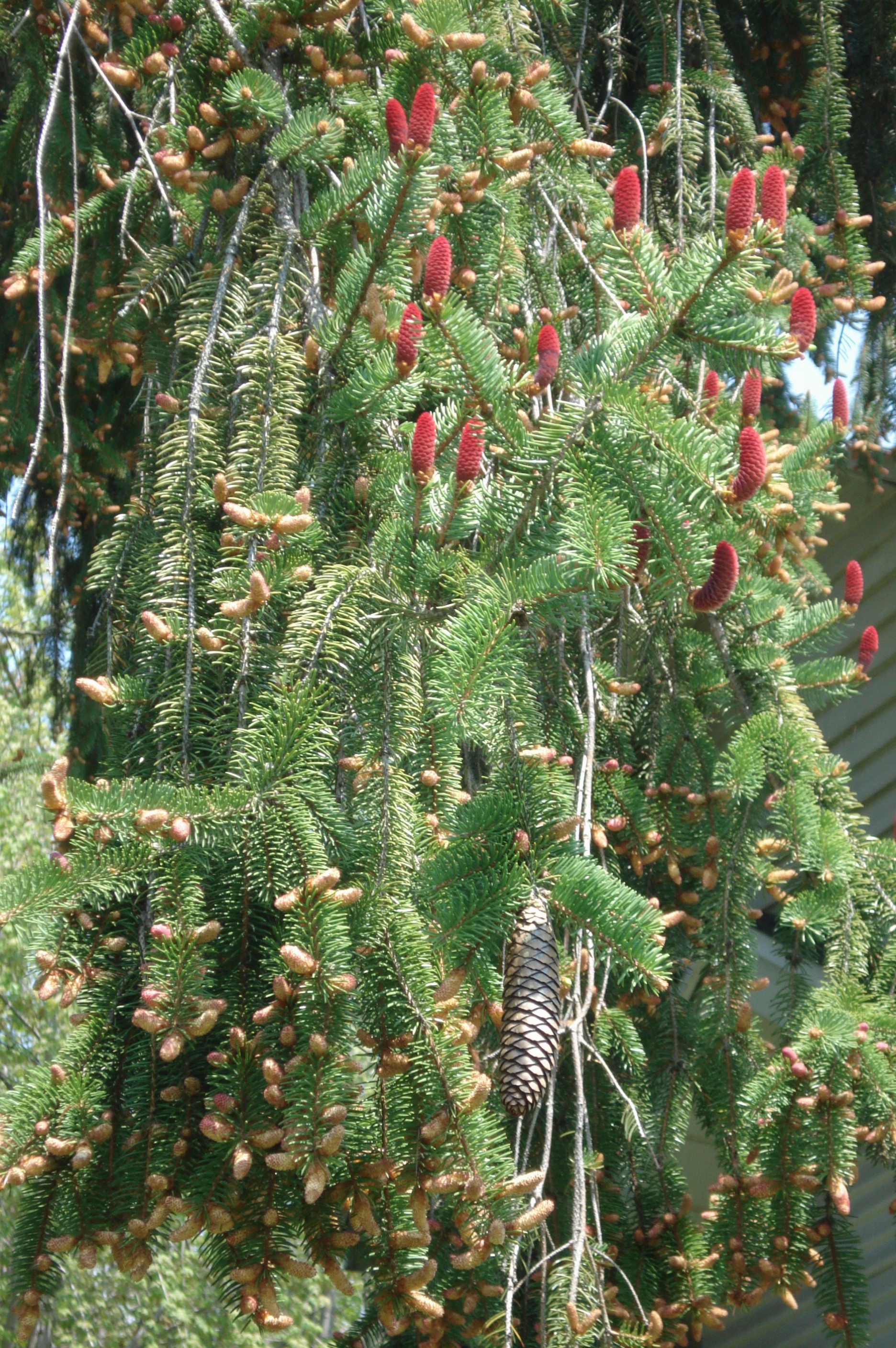
Norway Spruce flowers, early May
Last week construction of a small garden labyrinth topped the active list of Bluecircle projects. The old Norway spruce over the site was in full bloom and every breeze carried a smoke-like puff of pine pollen to bless the work.
First a compass was used to place the labyrinth entry due east of the center point. A tape measure and spray marking paint were used to lay out 6 concentric circles (radius = 50, 74, 98, 122, 146, 170 in.) and then a 24-inch string attached to the spray can was used to mark the turns connecting the circles. The sod along both sides of the marked circles and turns was cut with a gas-powered edging tool. The grass strip this created was discarded and replaced with half-round 4-inch plastic drainage tile. Landscape staples were used to anchor the tile and keep it in place. Finally about a ton of 2-inch river rock was placed in the tile to complete the project. The total cost for tool rental, two 100 ft. rolls of drain tile (cut with a saber saw at 12:00 and 6:00 to make the half-round tile) and the stone was approximately $130.
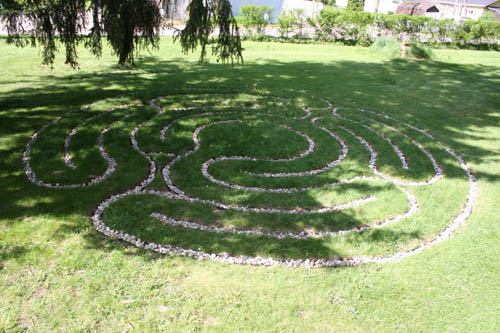
30-foot garden labyrinth laid with river rock
Big tulips, little foxes and chinkapins join the Bluecircle
 Spring tree planting was in full swing this weekend. Tulip poplar, chinquapin oak and maple leaf virburnum seedlings from the Berrien County Conservation District found their places on a grassy slope facing N. Watervliet road. The work was closely supervised by our resident vixen who recently brought at least 7 kits out to play.
 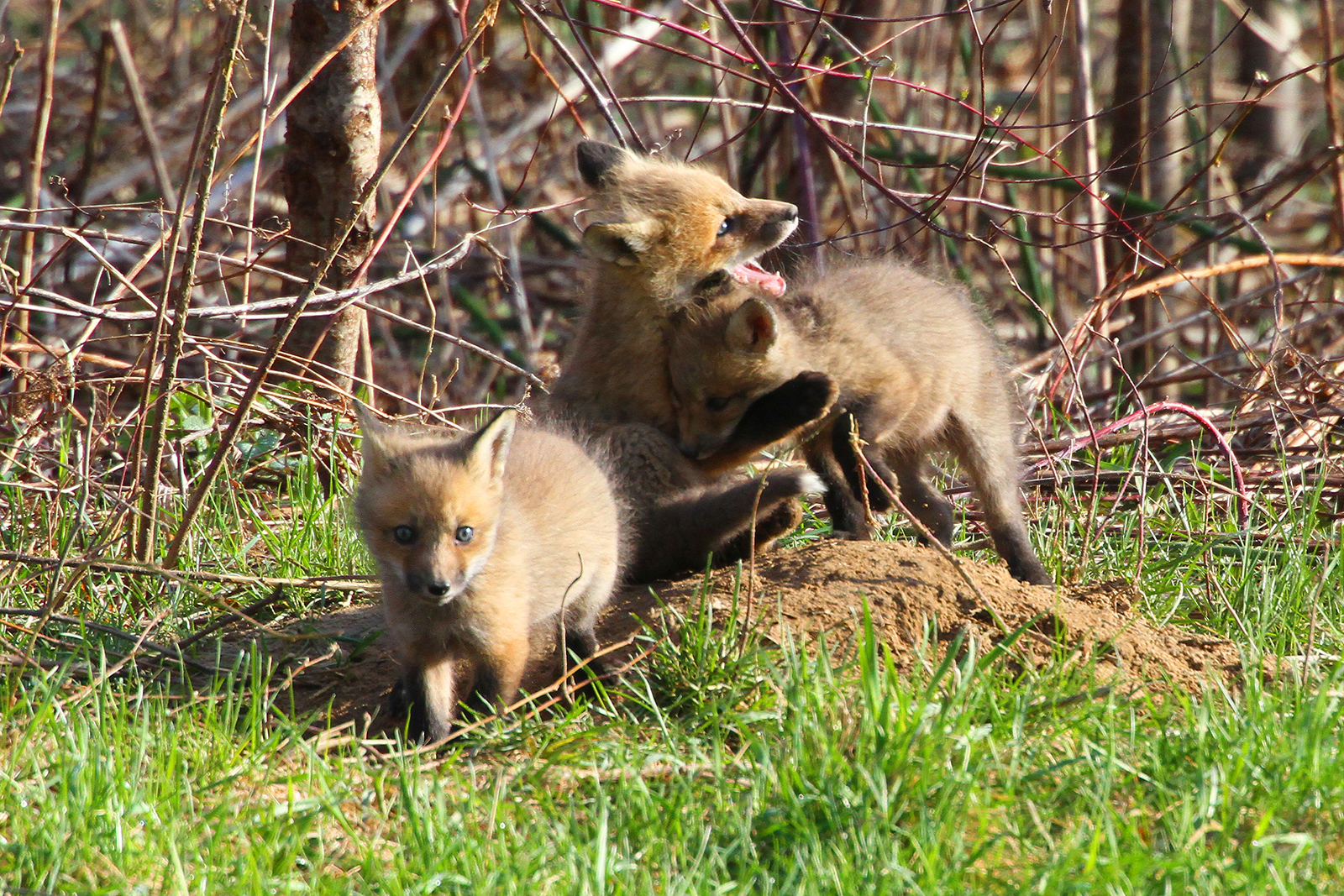 Determining the exact number of little ones is challenging because they’re always in motion, but thanks to my neighbor’s photographic and observational skills we get incredible close-ups and updates on the pack. The leafing-out of underbrush and spring grasses will soon hide the kits and their den.
From the Duchesses of Smith’s Orchards to the Pines of the BlueCircle Farm

Smith’s orchard on Hetherington Hill, Watervliet Twp. ca. 1880
In the late 1800s Sebastian Smith and family developed one of the largest and most successful apple orchards on the southeastern shores of Paw Paw Lake. Their apples included the Duchess of Oldenberg variety, originally developed in Russia and recognized at the time as a superior variety in New York and Michigan. In a portion of an 1880 illustration of his Heatherington Heights orchard reproduced above (from “A 20th Century History of Berrien County, Michigan” O.W. Collidge, 1906) a single-story white “cottage” is visible above the road on the right. A winter photograph from about the same location shows the house that remains at that site, possibly on part of the original foundation, albeit nearly hidden by new homes on the east side of North Watervliet road.

Heatherington Hill from the east, 2015
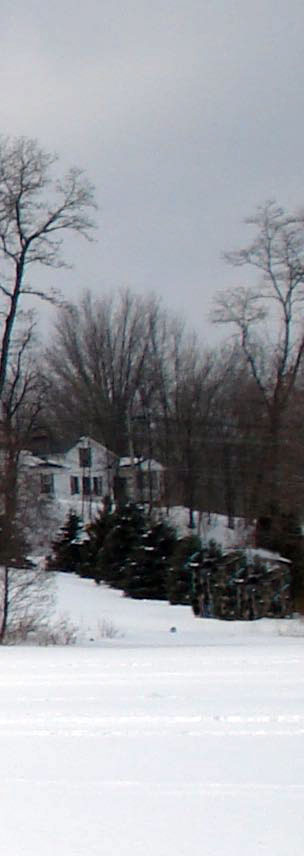
Detail of Smith’s “cottage” from edge of panorama
Mr. Smith sold the 19 acres of this orchard that now hold the BlueCircle Farm to his son John in 1902, then retired to Florida. The land changed hands and became Wilmer M. Pratt’s “Apple Orchard Farms” in 1918. The farm passed from Mr. Pratt’s estate to Chicago Oak Park residents Gerhard and Lulu Schwarting in 1928. They maintained the orchards, harvesting 6000 bushels of Duchess apples in 1930, but continued to be regular summer visitors. They developed their Paw Paw Lake waterfront on Woodland Ave. into summer cottages and the area north of Hetherington Hill and Fairview Beach and east of Chicago Terrace became known as “Schwartings Orchards”. The Schwarting’s left the orchard business in 1944 when they sold to HJ Peters of Benton Harbor. Mr. Peters and later his son Forrest owned and operated the orchard until 1952.

It was then bought by Marion S. Atwill who owned adjacent orchards she had inherited from her father. In the aerial photograph above from the 1960s six acres that will become the Woodland Conservancy appear cleared of trees except for a small area to the north. A peach orchard and tomato rows took the place of Schwarting’s apple orchard during these years. The land was bought by a developer in 1976 and after almost 100 years the orchards disappeared entirely. In late 1997 Delavan Sipes and the owners of several adjacent lakefront properties that once had been owned by the Schwartings founded the Woodlawn Nature Conservancy on the south side of Woodlawn Ave. He described the Conservancy in a column he wrote for the Tri-City Record in 1999: http://23.25.1.108/Coloma/GSI_Sing_PDF/The%20Tri-City%20Record/2000-2009/2009-08-13_07.pdf#xml=http://23.25.1.108/Coloma.asp?cmd=pdfhits&DocId=33407&Index=C%3a%5cinetpub%5cwwwroot%5cIDX%5cCOLOMAALLS&HitCount=1&hits=bc0+&hc=206&req=schwarting
This split the orchard land into two roughly equal parcels – the Conservancy on the west, and to the east a mostly open field that eventually would become Bluecircle Farm. Plans to develop additional condominiums or a horse farm on this site were eventually scrapped. For the next 13 years weeds and spreads of black locust, maple, mulberry, wild grape and raspberry spread from the former fencerows – were repeatedly mowed, cleared and burnt – and persistently rose again from battered stumps.
The first pines of the BlueCircle Farm were placed in late 2010, beginning a fresh cycle on this hill above Paw Paw Lake.
Sunny snowy again
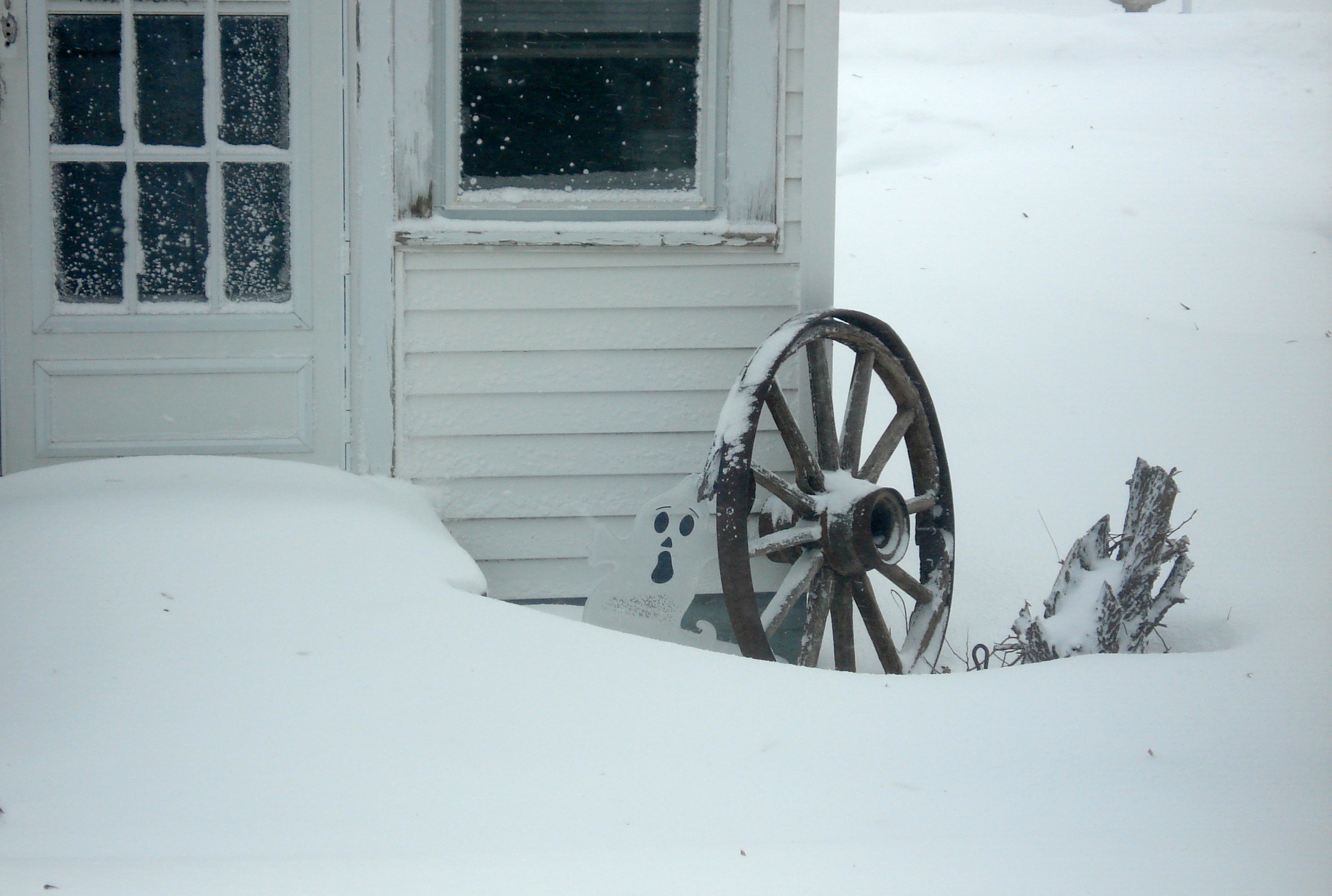
Ohhh – snowww
Another round of lake-enhanced snowfall makes the landscape fresh but travel slow. Intermittent bursts of full sun turn all a blinding white and do nothing to warm the hill when they accompany a driving, albeit intermittent northwesterly blizzard. When the wind dies the snow falls as softly floating islands of icy powder. In contrast to grey days of January the sunny snowing does help mitigate the fact that this season has outlived its welcome. Maple treetops show bud swelling, evidence that its almost time to cut and root poplar twigs again. But not yet – near-record cold is predicted on a new moon night above the frozen lake.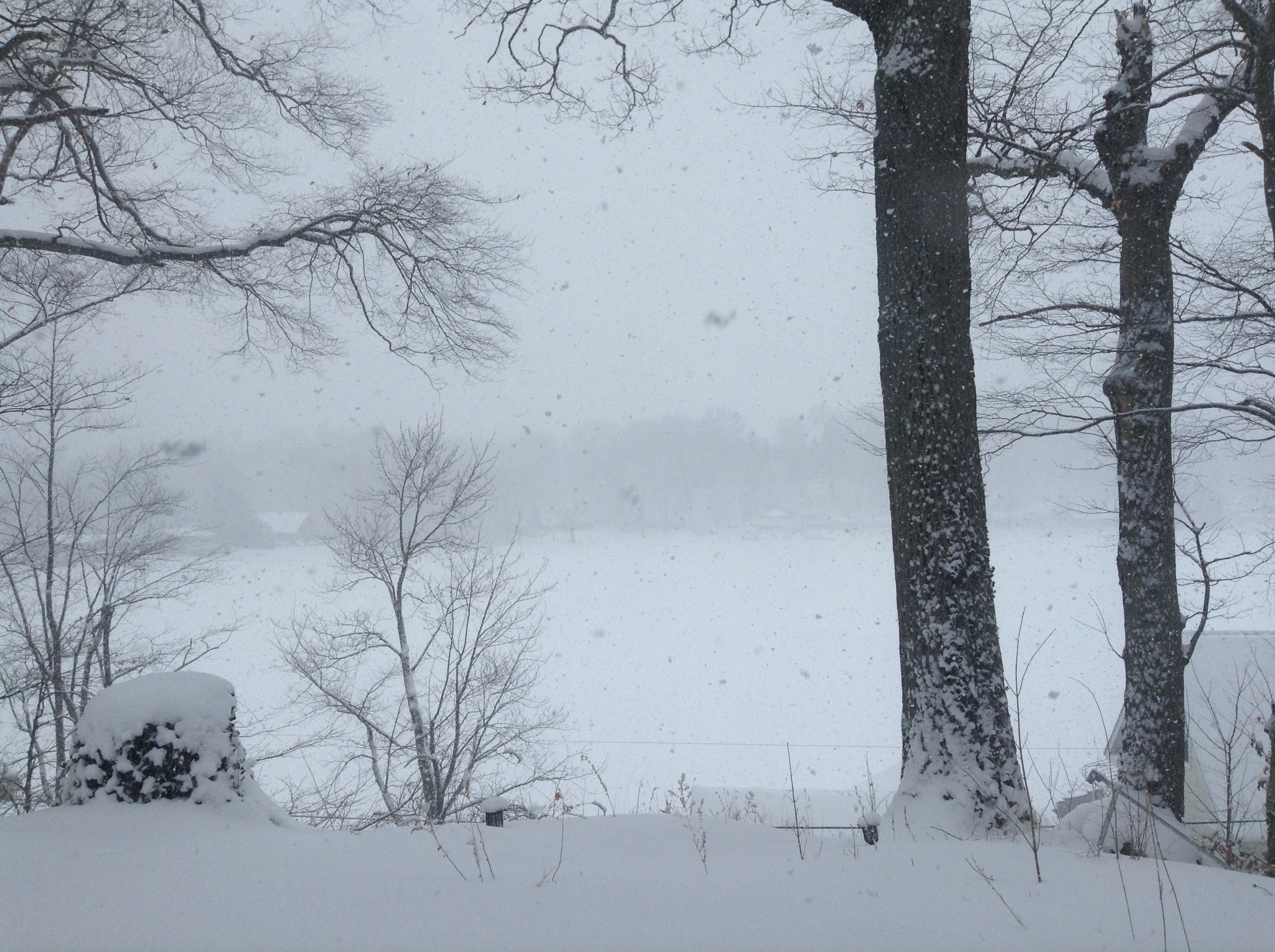
Snowy trails of February
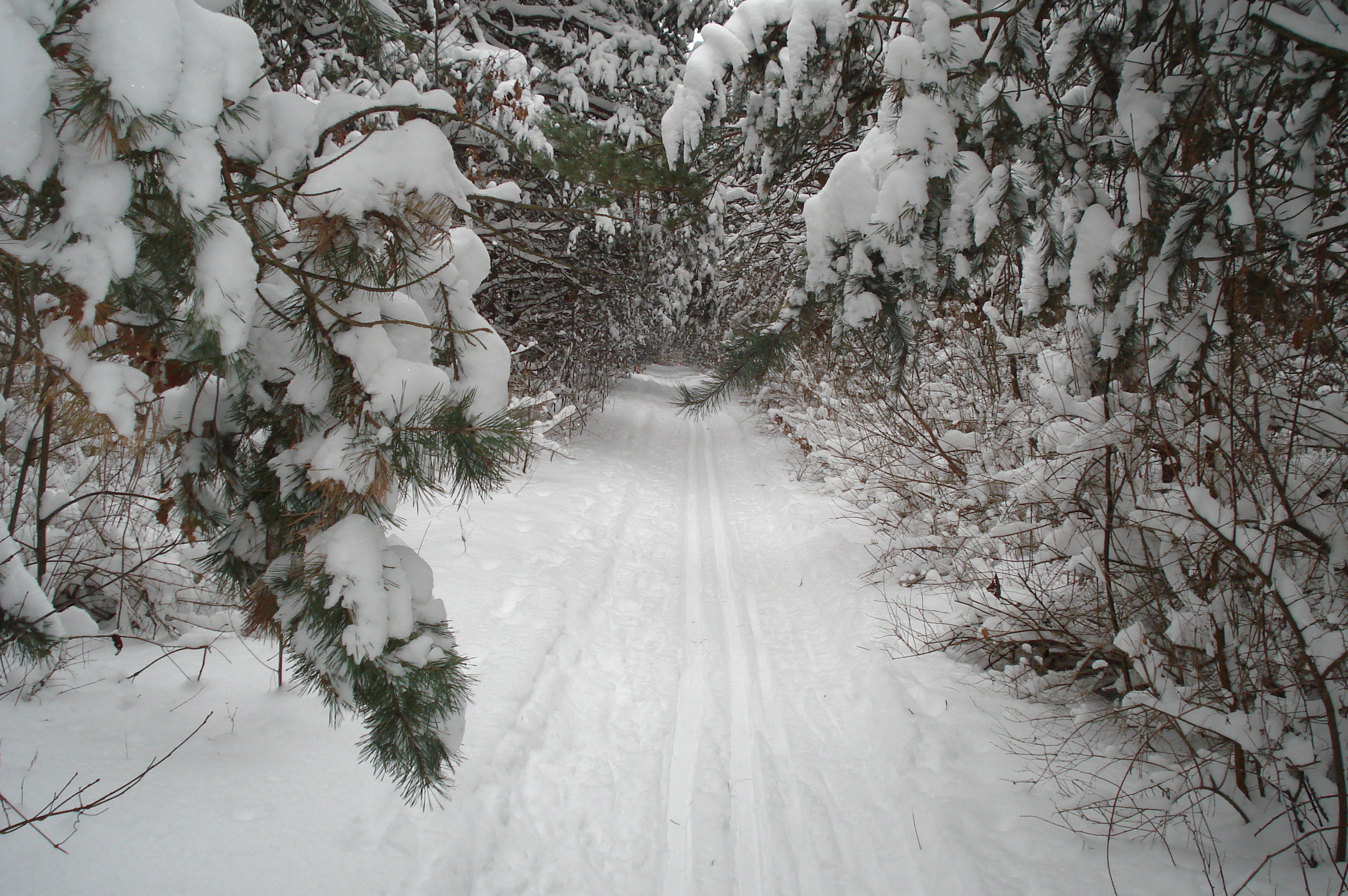
Pine Tree Loop trail, Sarrett Nature Center
Fresh snow with a daily topdressing of lake-effect powder has resurrected the full spectrum of winter outdoors. The nordic trails at the Sarrett Nature Center are nicely groomed and include a few bursts of downhill excitement. Followed, of course, by the inevitable climb out of the dune ravine.
Paw Paw Lake has been largely ignored by snowmobile riders – only a few tracks stretch across the snowy ice.
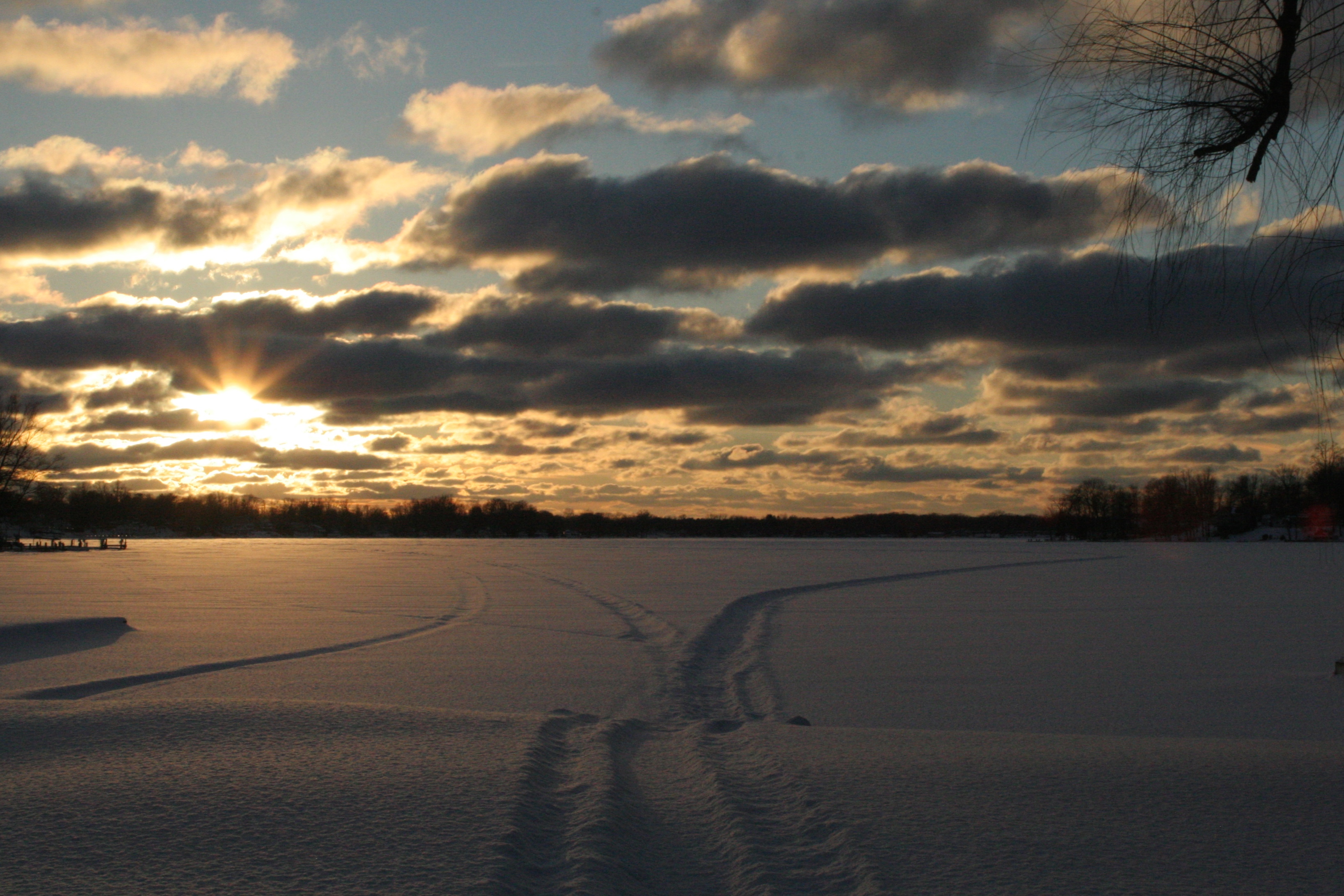
Sunset approaches on Paw Paw Lake ice
Days of indecisive grey
 Hand-biting cold and starlit skies that came with the new year have yielded to a time of overhead grey, a foggy lake, and bland half-frozen snow. The howling northerlies that bent every limb have passed leaving a windless sky. Likewise, the days drift by with one much like the next. Grey light creeps up in the morning, brightens a little, and fades into evening without warming the day. These are not weeks to lay out plans, choose among options or eliminate alternatives because they share a timeless quality that invites leisure, even drowsiness. While it’s impossible to lay adrift on frozen waters, walking on the snowy landscape can be as aimless.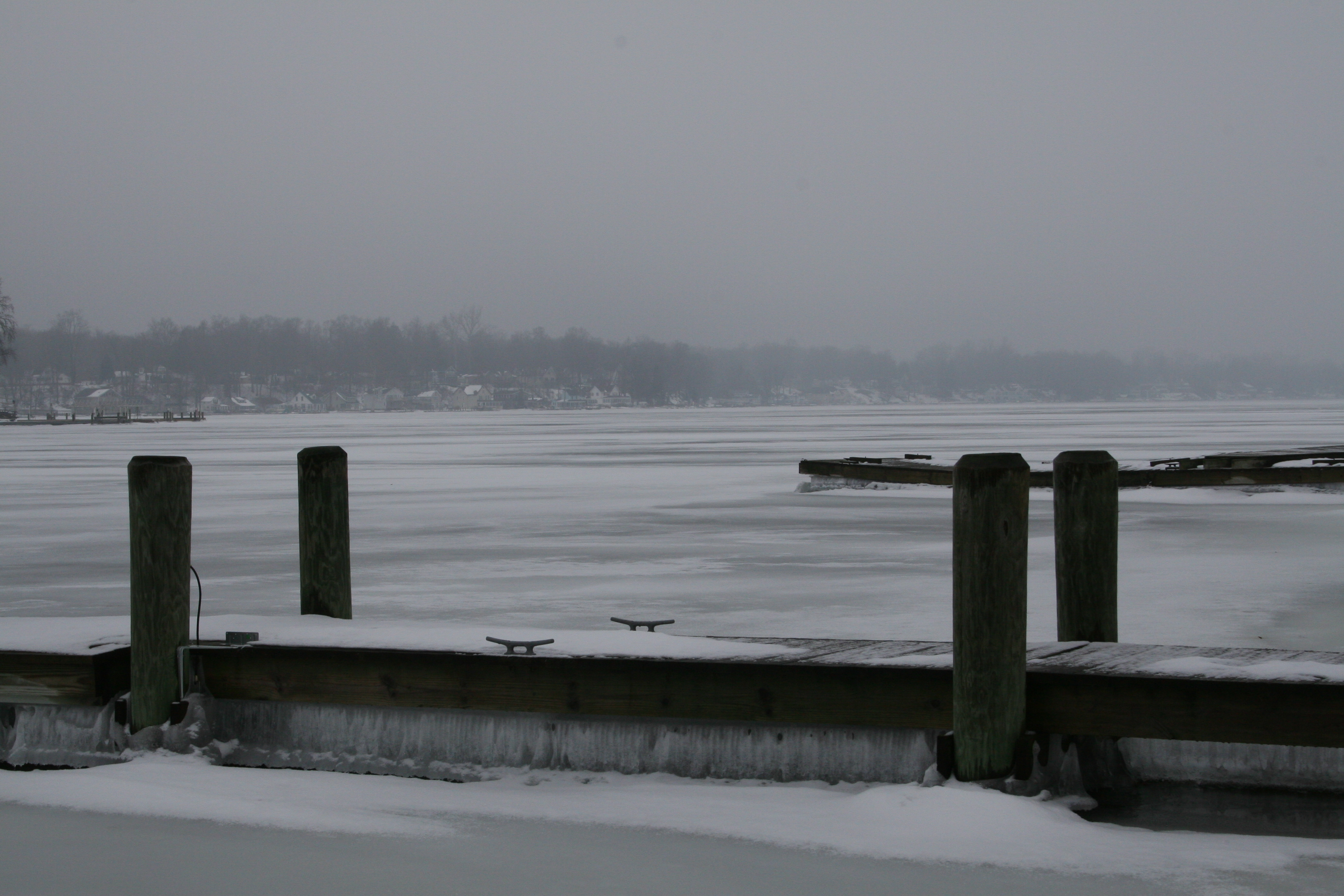
A year of “blue” corn & amaz’in little punkins
The last winter wind of 2014 howls across the whitecaps and up the bluff blowing the year to a close. The patch of blue corn, or more correctly of blue, and red, and white and green corn mixed wildly on almost every ear is only a memory. And a lesson that such colorful varieties of vintage corn hybridize freely and cannot be planted in adjacent hills. Even the purple stalks and husks of a few “blue corn” plants didn’t match the ears they yielded.

“Bluecorn” stalks
A midsummer blog post about the unusual hybrid squash turned out to be premature, since ultimately the extensive vine would bear 30 miniature pumpkins. While not expected in the “summer squash” area of the garden, they provided Halloween table decorations for our local craft brewery, a tiny Jack O’lantern for a granddaughter, and even a little pumpkin pie filling. Next year we will grow these on a trellis.


Swans of the Winter Solstice

Whether these are the longest nights or shortest days is a matter of perspective. Waking with the sun reveals thin, rubbery ice near shore that just supports a few hungry gulls. In a few hours shifting winds will clear it away – for now. Within a week or two the bay will be white with ice and snow and the lakes’ quietest season will be underway.

Gulls at the icy edge
It’s a time of greys and whites punctuated by the blackness of clear starry nights and brightened by glimpses of sunny skies and sunsets. As we transitioned today from an old season to a new beginning we were visited by a trio of swans. Beyond their grace and strength these visitors are a powerful symbol in many traditions and a fitting gift to renew our spirits. http://www.druidry.org/library/animals/swan
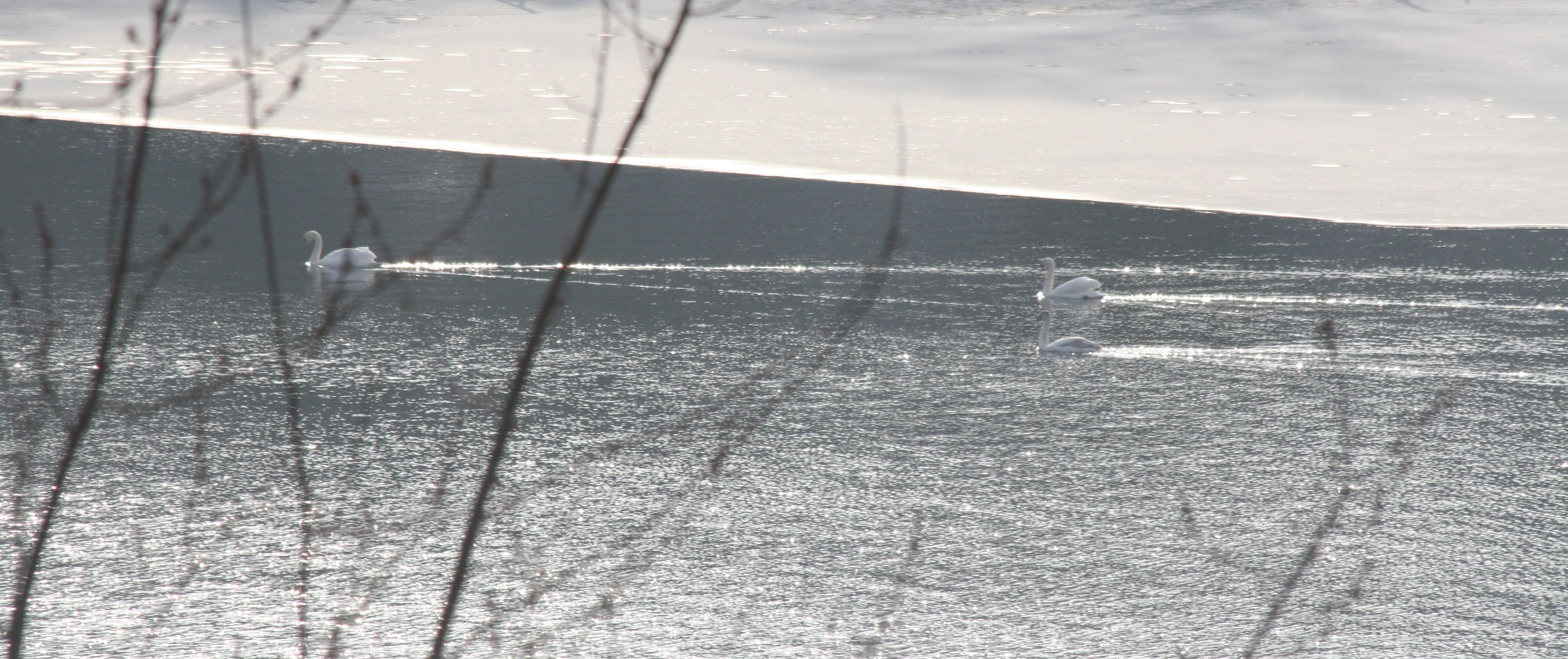
Three swans a-sailing
Long shadows, short trees
The Solstice approaches and long shadows are everywhere.
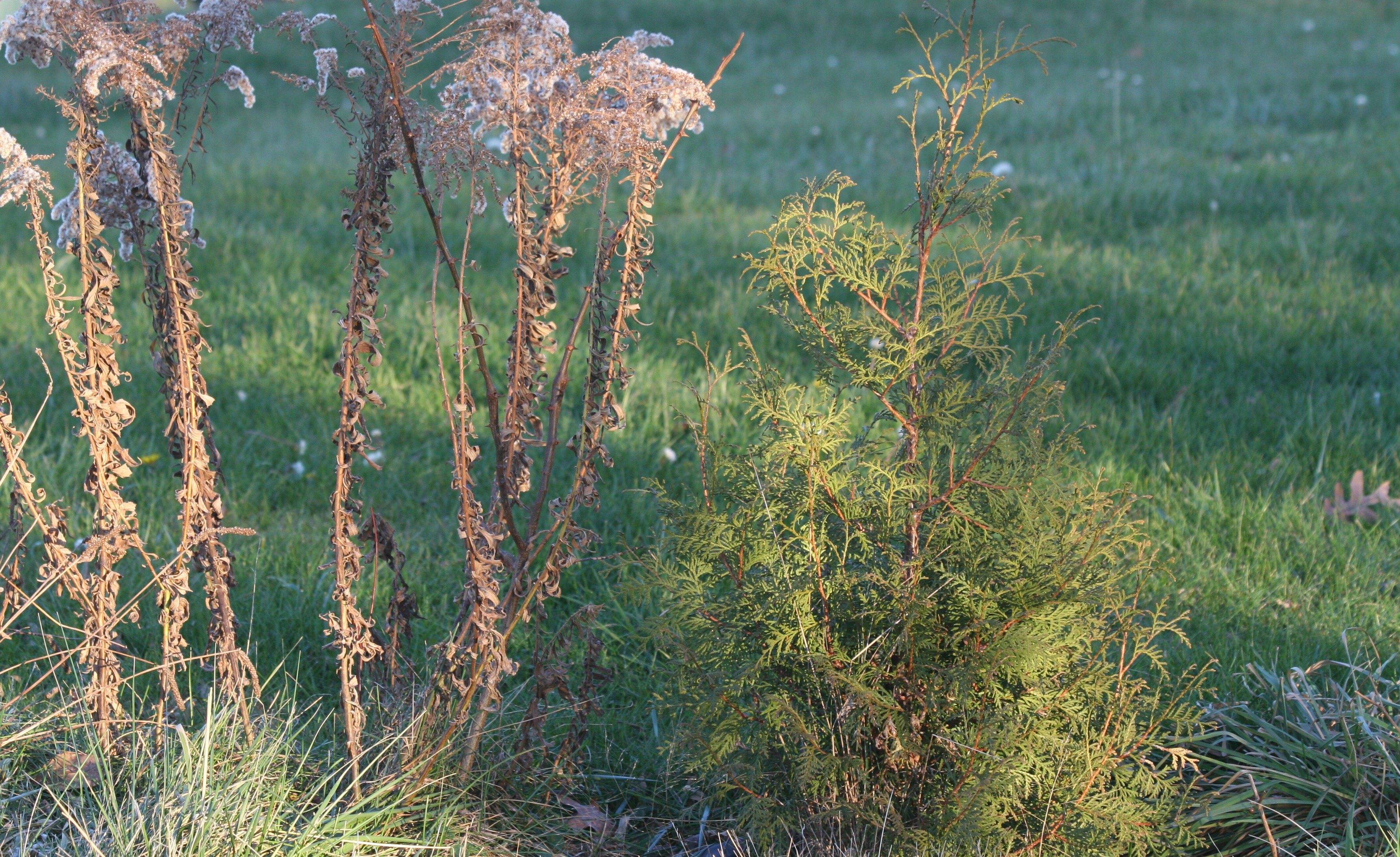 Where weeds grew taller than kindergarten trees their seed pods and frost-ravenged skeletal remains no longer hide the progress of the conifers. What snow had accumulated was rained away and green grass remains a significant part of the landscape, albeit peppered with faded oak and maple leaves. The annual inventory of surviving pines and poplars came to just over a thousand. Overall success this year was very good except in a planned windbreak of red cedars. This planting at the crest of a hill suffered from being in heavy clay and too far from a water source. So far only hybrid poplars appear to thrive just about anywhere.
 Pines, either Scotch, red or white now outnumber the short-needled spruces and firs. A few that were planted as “3-yr transplants” instead of seedlings now stand chest high or better. The 5″ pine seedling on the left took root in the shadow of grasses but should rise above them next year.
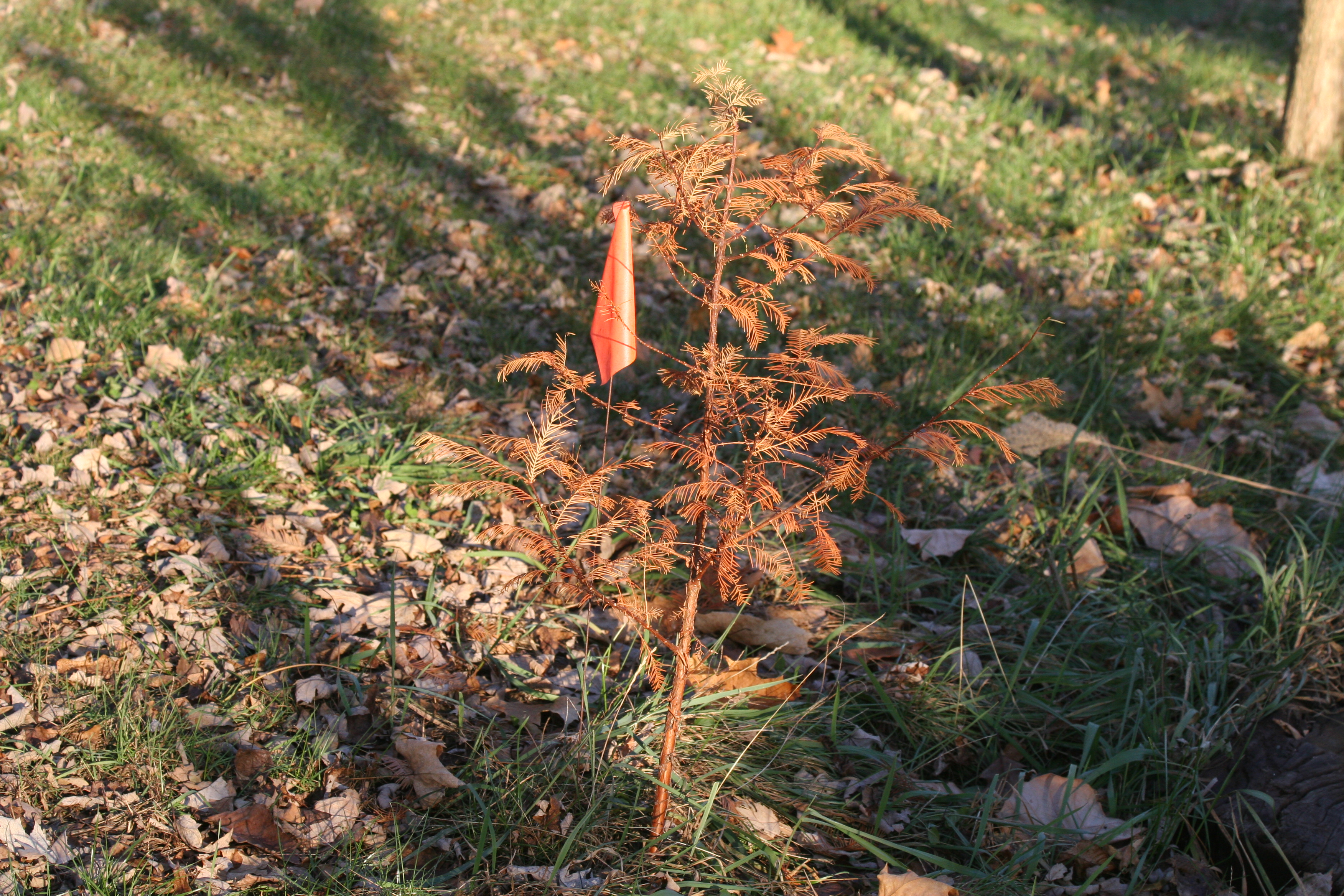
A dawn redwood after the frost
 bluecirclefarmdotcom

