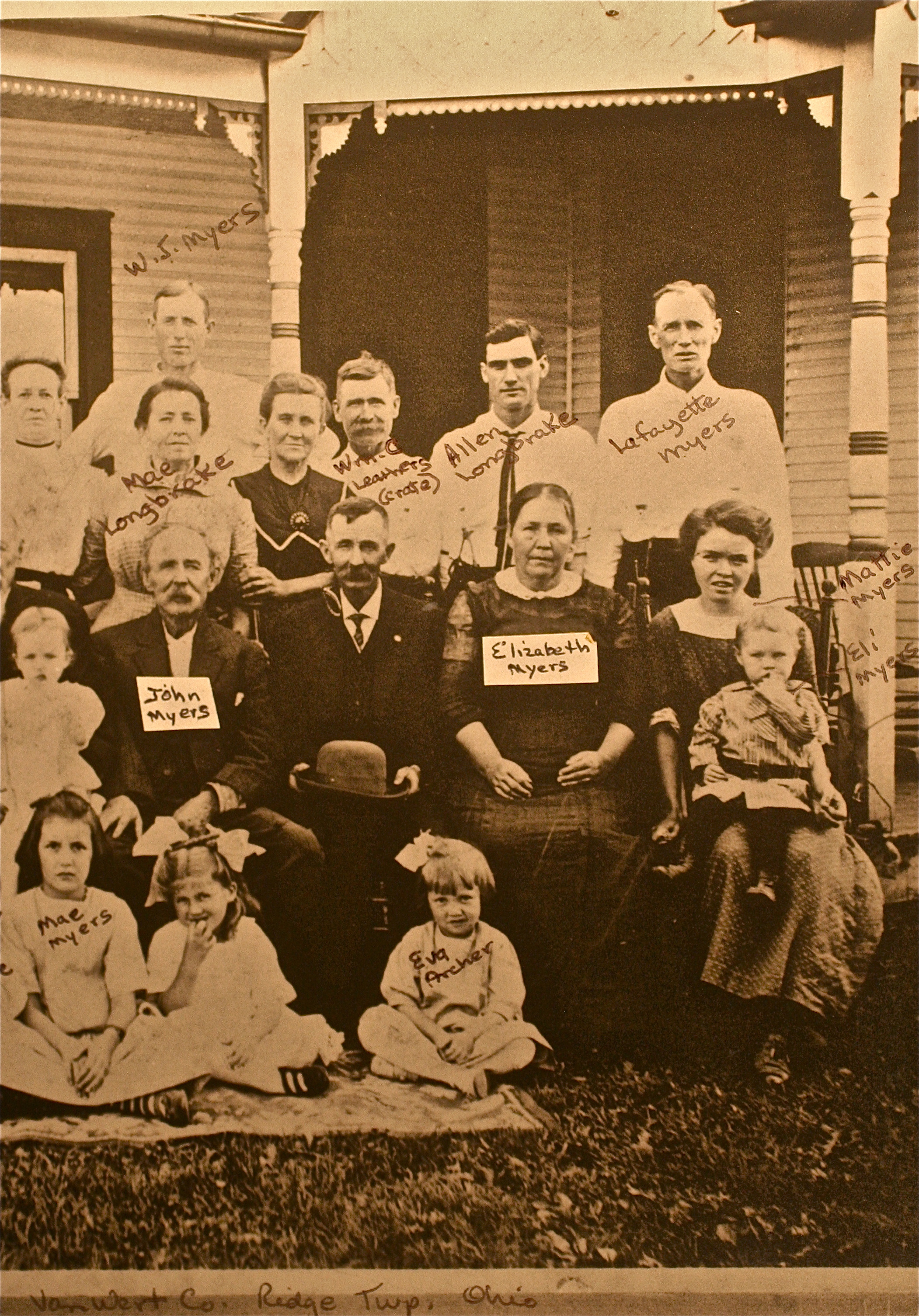
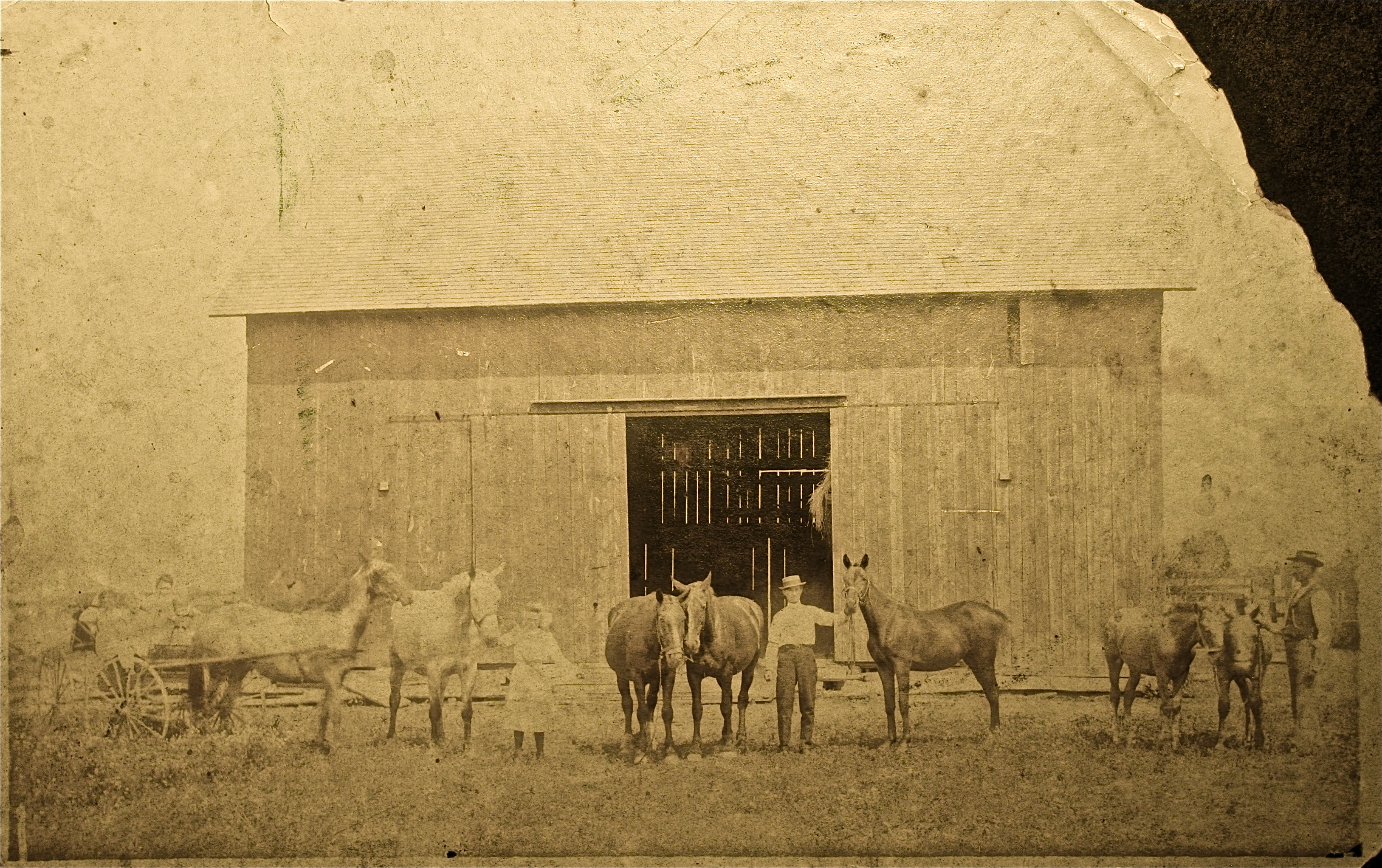
Some of the family’s farm roots were the subject of a recent post, and these paragraphs will try to capture how planting seedling trees on fallow ground led to the naming of Bluecircle Farm.
For ten of thousands of years trees grew here. Between 1864 and 1887 a local papermill and other uses for the virgin oak, tulip, and walnut stands led to clear-cutting and initial cultivation of the hilltop. A successful apple orchard planted by Sebastian Smith survived for about 80 years, although the land was owned by a Chicago banker in the 1920s. Around 1970 the orchard was replaced by vegetables cultivated by the Israel and Marion Dixon family who also owned farmland a mile to the east. Following Mrs. Dixon’s death in 1987 only scrub honeylocust, cottonwood, stunted maple groves, groundhogs, snakes and mice survived periodic mowings of the field by its new owners.
A last rough tearing, cutting and burning of high piles of brush and trees in mid-summer 2010 prompted our purchase of the farm. In a song written during the VietNam War, Harry Chapin speaks of the cycle of living and rebirth :
All my life’s a circle;
Sunrise and sundown;
Moon rolls thru the nighttime;
Till the daybreak comes around.
All my life’s a circle;
But I can’t tell you why;
Season’s spinning round again;
The years keep rollin’ by.
It seems like I’ve been here before;
I can’t remember when;
But I have this funny feeling;
That we’ll all be together again.
No straight lines make up my life;
And all my roads have bends;
There’s no clear-cut beginnings;
And so far no dead-ends.
Chorus:
I found you a thousand times;
I guess you done the same;
But then we lose each other;
It’s like a children’s game;
As I find you here again;
A thought runs through my mind;
Our love is like a circle;
Let’s go ’round one more time.
As in our lives, time and the changing seasons impose a predicable circle of life and rebirth on the land. The opportunity to plant again on ground once home to native trees, and to so restore both a family heritage and a small part of the dignity of the place is a gift. It is an opportunity to celebrate and live in a Bluecircle between the adjacent lake and clear autumn sky.