Celebrating green in midSummer

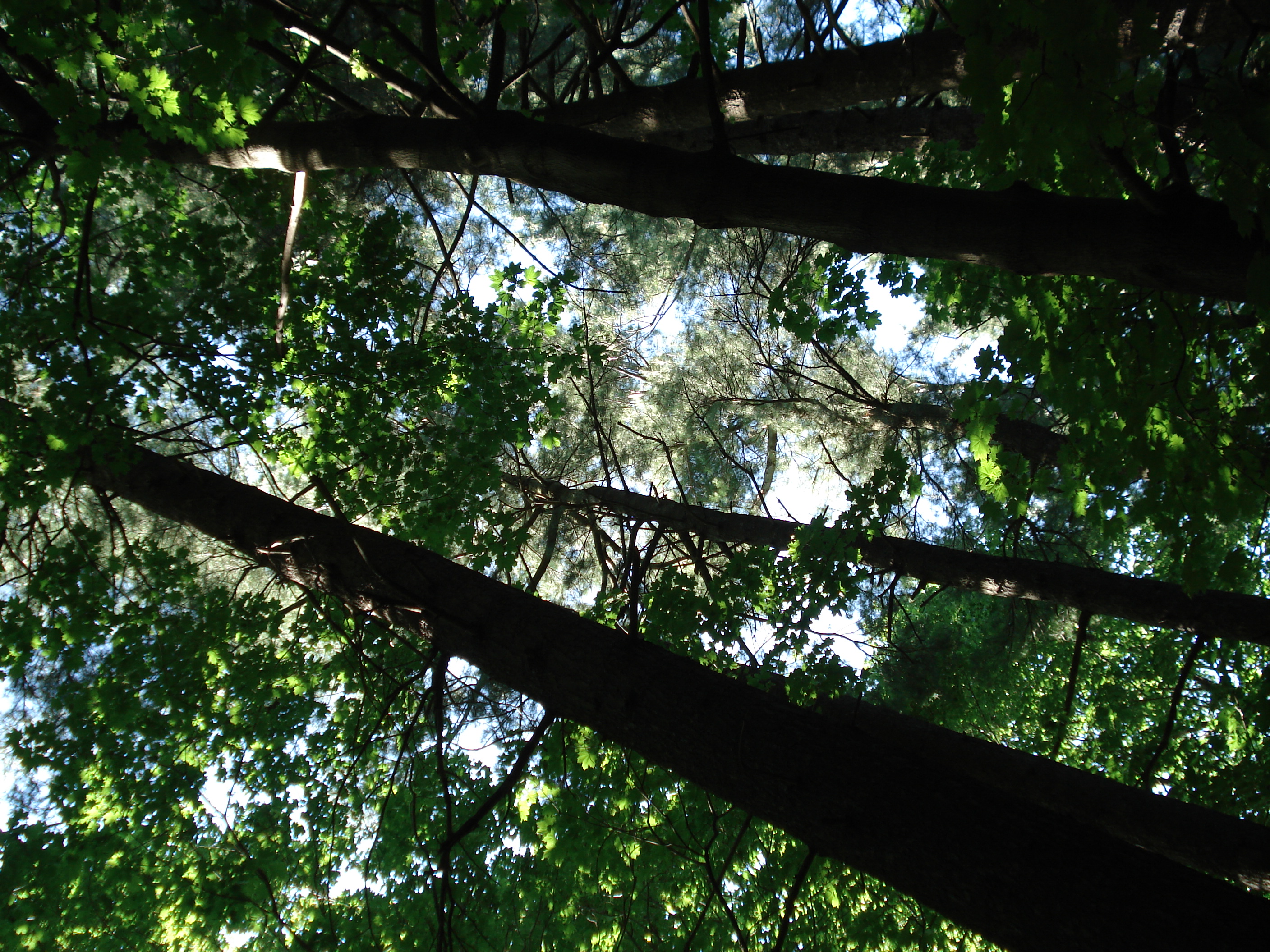
IMG_0984This Summer the Bluecircle is washed with green.  There is impressive new growth on almost all of the pines that survived the drought of ’12, and on a few hundred Scotch pine replacements.  It is almost lost in the rapidly rising tide of ragweed, wild grape and even poison ivy – wherever it has escaped the mower.  The Japanese beetles, brown with a little green, have emerged to challenge the upwards growth of the cultivated grapes.  Ironically, these guests with no natural predators seem prefer wine grapes and roses over the wild varieties.  Overnight new leaves and blossoms were lost and it was time to break out the pesticides.

The grasses have already produced seed and now mostly subside, growing dryer by the day.  Random sunflowers seeded here and by the birds and rodents are weedlike but will evade culling if they lie within the rows of pines or infant oaks.   So far, regular rains have improved the appearance of essentially everything on the Bluecircle.

Of bonfires and ashes in Spring

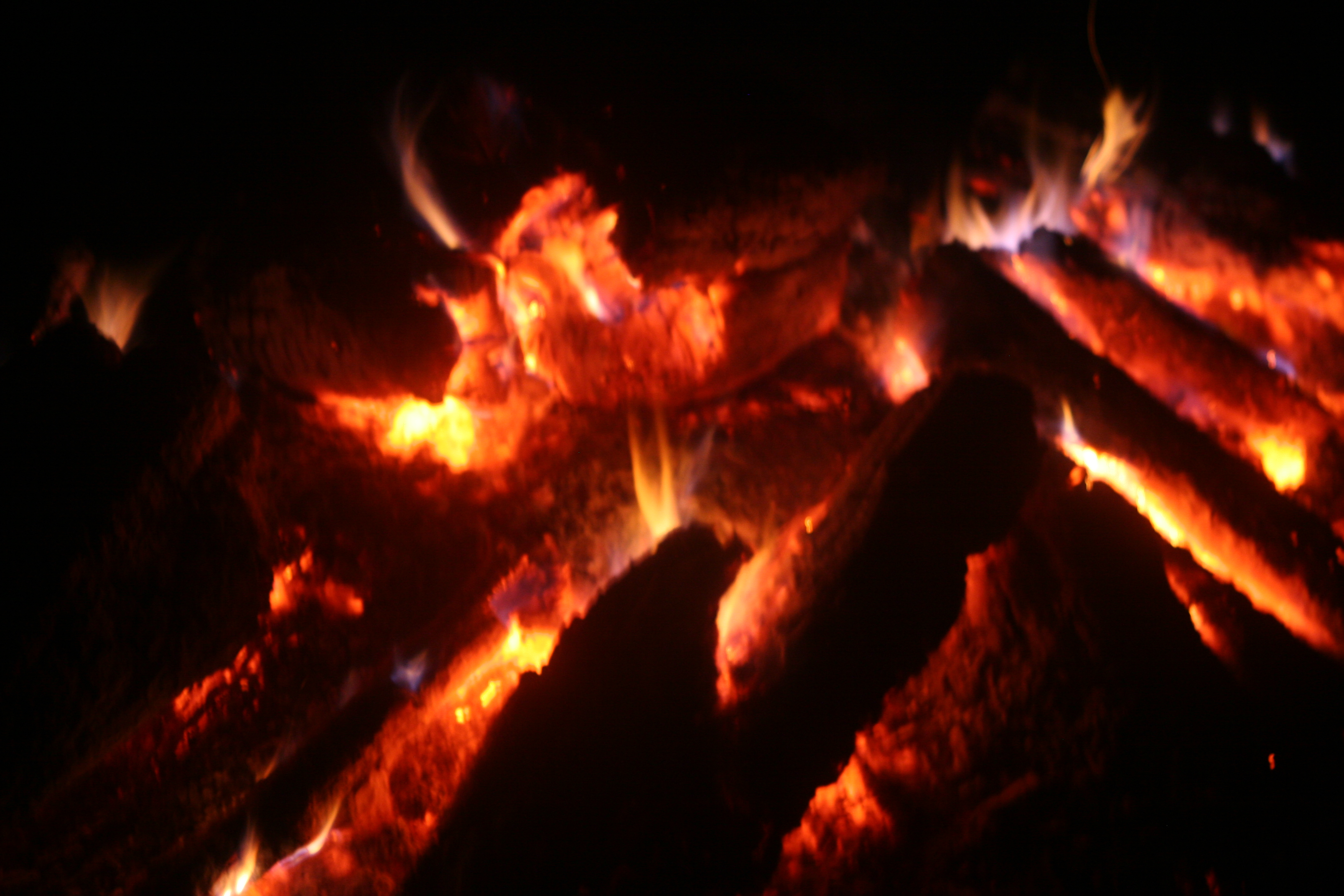
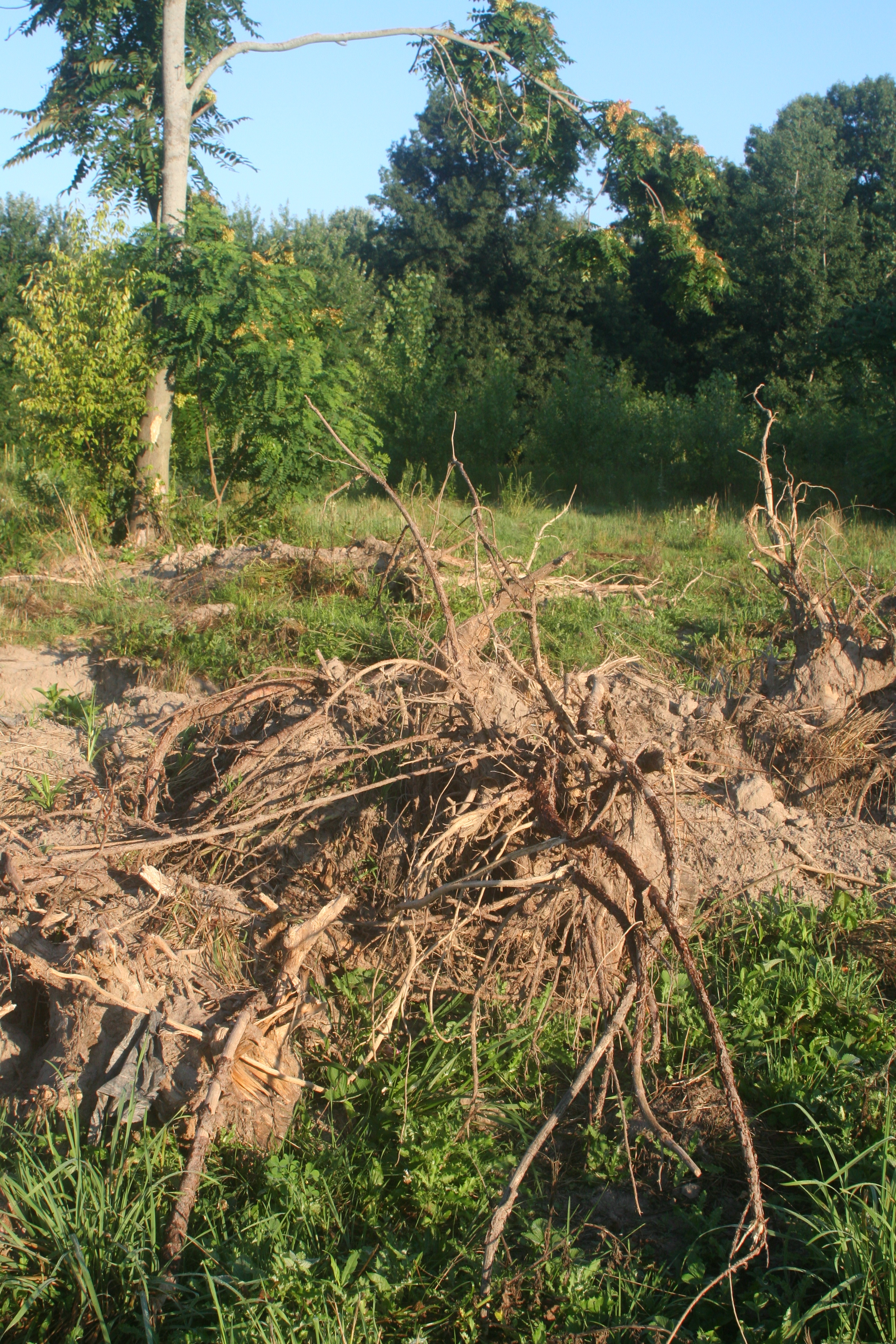
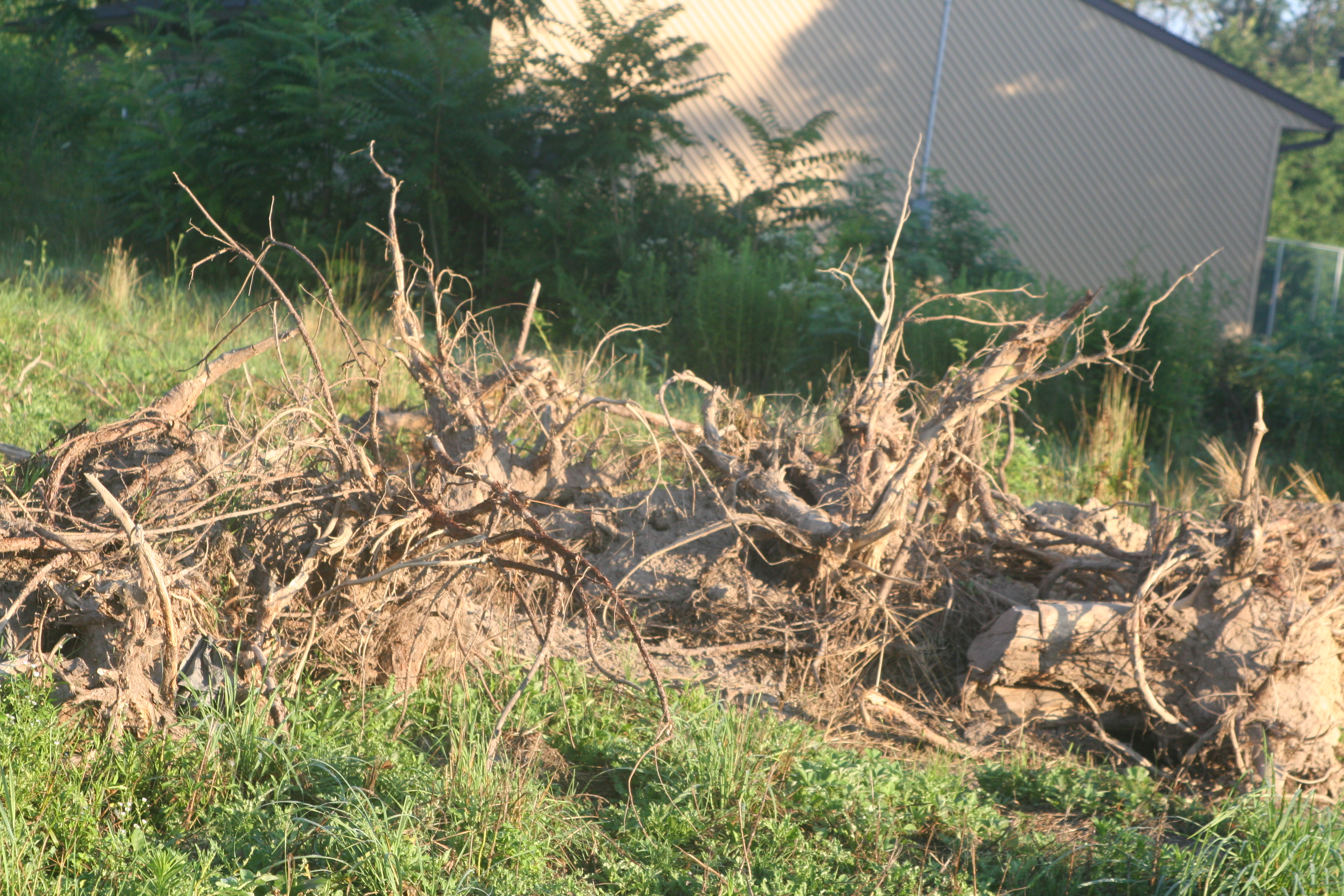
IMG_0884The great stump of a fallen Bluecircle tree (see post of   1 Jan 2012 ) was the site of a lengthy campfire this weekend.  Many years passed as this giant maple grew, and its roots heaving and raising the plane of the lawn will be evident for years to come.  With a steady southerly breeze, the stars of clear night sky and the Dipper straight overhead it would have been a perfect time of solace in most times, but not this season.  The Bluecircle lost a treasured daughter a few weeks ago and many tears, as well as rain, have marked the greening of the year.  New branches have yielded new leaves, and the grandaughters of the next generation visited to pick tulips and grow in the sun – but the smoky remembrance of a Winter of critical illness hangs in the air and on the clothes the morning after fire.  Dancing, transparent flames through day and into darkness have given way to living embers and finally ash mixing with the wind.  We will celebrate as best we can in mourning.

The frosty vine bending test

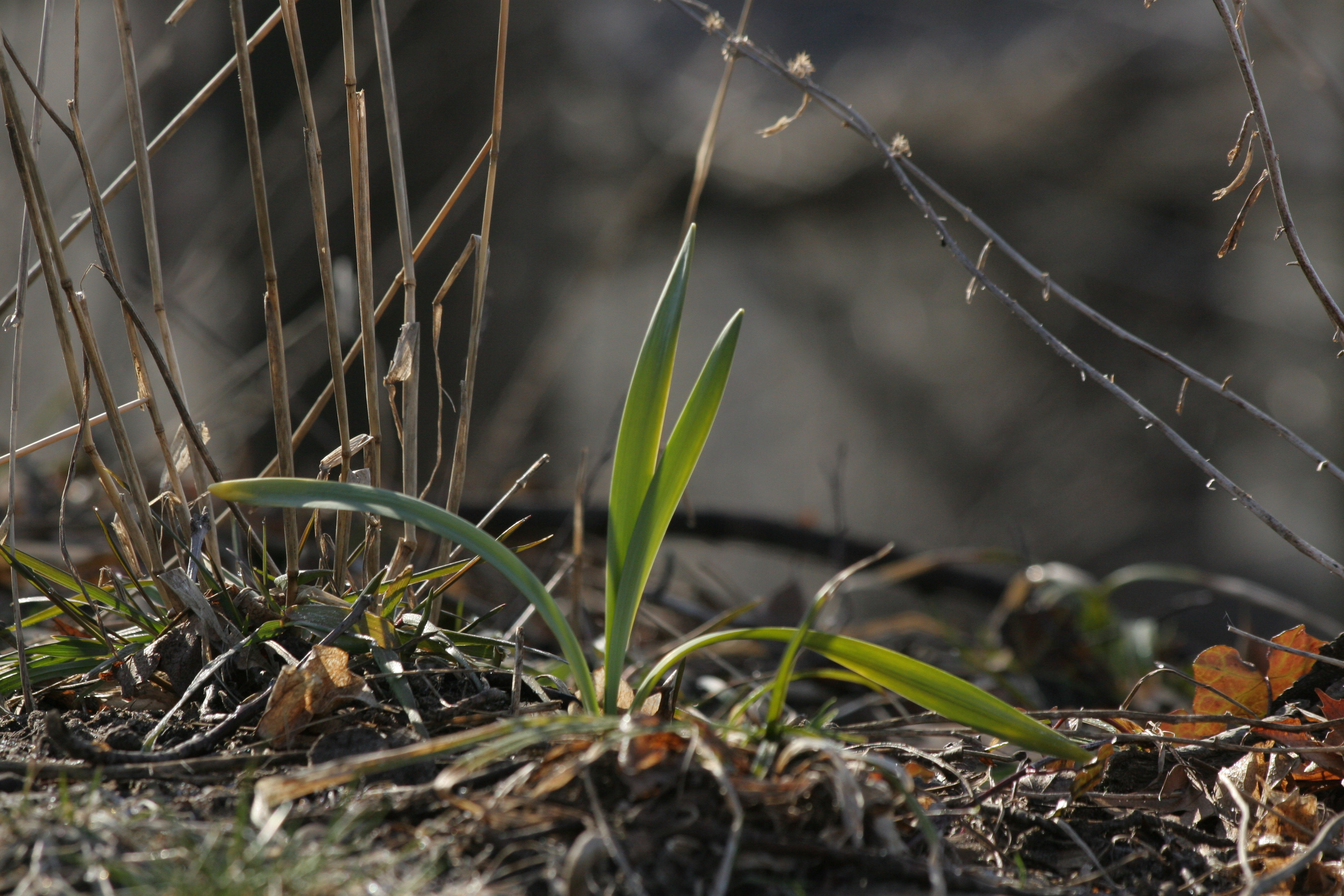
When Winter strips limbs bare and shivering the woods could pass for dead. A white blanket shrouds even the moss and blades of grass that never quite fade to grey or blacken like the piles of leaves. How then to judge the condition of fledgling grape vines first weakened by transplantation, then by drought and finally by a Kamakazie (divine wind) attack of beetles? With the last drifts gone from the Bluecircle it’s time to take stock.

A few Pinot Gris vines, like the tulip poplars felled by high winds in August, have snapped at the ground and need no further inspection. Here and there there are empty spots in the rows where the uncertainty of survival has prevailed. In contrast, precocious buds emerge in a favored row or two to inspire confidence. The practical approach turns out to be simply bending each vine in turn. Most flex in their early Spring vitality and have survived the test of year 1. Sadly, some are brittle and can only yield memories.

Melting ice on Paw Paw Lake

Image

Gulls are gathering on Paw Paw Lake to witness the passing of Winter. By afternoon there is open water on the north shore of Paw Paw Lake. The shade of the hills on the south shore shelters ice now too thin for walking. Each cold, clear March night with little wind allows refreezing, but darker cracks that reach to the south will soon free the lake for another year.
I suppose the gulls have fishing in mind and wait impatiently for more open water. They do not remain here in large numbers, possibly because seawalls bind the shoreline almost everywhere. The small areas of remaining beach soon will be scoured by ski boat wakes and there are calmer, friendlier waters nearby.

For 100 years most lakefront visitors and many property owners on the lake have hailed from Chicago.  Like the gulls they are shorebirds that nest elsewhere.  The change of seasons and Spring Break brings the first of these visitors who are essential to the lakeside economy.  Soon they will fly across the waters on skis, tubes and pontoons.  Until then the cold waters of Paw Paw will bask in the sun and slowly warm to the task of entertaining company.IMG_0940

Planning the plantings and watching the clouds

The lingering Winter makes it hard to believe that many of this year’s Bluecircle tree seedlings will be planted over the next 4 weeks.  The Chief River Nursery Co. of Grafton WI and the Berrien County Conservation District will again be my chief suppliers.  The conifers  will be scaled back both in number and variety to Scotch Pine, Black Hills Spruce and Red Pine.  I expect these to be more drought-resistant than White Spruce, and the new well stands in reserve.  However, success or defeat depends largely on timely rain.IMG_0912

For the first time this year we will supplement poplar cuttings from hybridpopular.com with some from the Bluecircle, more on that in later posts.  The early failures of the majority of poplar cuttings last year may have been due to premature emergence of leaves, so for the first time these cuttings will be sprouted on the Farm.

For the first time red oak and sycamore will be added to the plantings, albeit in small numbers.  Some of these will have the additional protection of nursery pots so drip irrigation can be added if the clouds fail to deliver enough moisture.  Both species represent investments in the next century inspired by the still-standing stumps of native oaks that graced these fields 100 years ago.

Near the Conservancy

Near the Conservancy

Winter always ends in March madness

Whether it’s the abrupt swings in temperature, or gusty winds that bring snow one day and inches of mud the week following, March brings an uncertain mood. The frozen lake and icy woods of February were predictable, and the lake winds yielded only a few inches a day of snow. No trace of green emerged from the frozen sand. But now, almost mid-way through unpredictable March, sunny spots yield a few tiny leaves. On the sunporch late mornings provide a surprising warmth. Should I set out pots of poplar cuttings, or will another week of colder-and-wetter-than usual weather lead to complications? If we order seedlings will the weather co-operate or will the ground still be frozen and infertile when they arrive? Risk abounds.
Comparing a basketball tournament to celebration of the Greek Olympics may be a reach, but the Gods of March (and Olympus) must enjoy our focus this month on a game that has “Cinderella teams” upsetting those with far more consistent winning records.  A game that can be won in 50 seconds (or 5 seconds) by fouling at the inbound pass and reducing the outcome to a simple game of “horse” from the free throw line  is wholly consistent with the March madness that surrounds us this time of year.

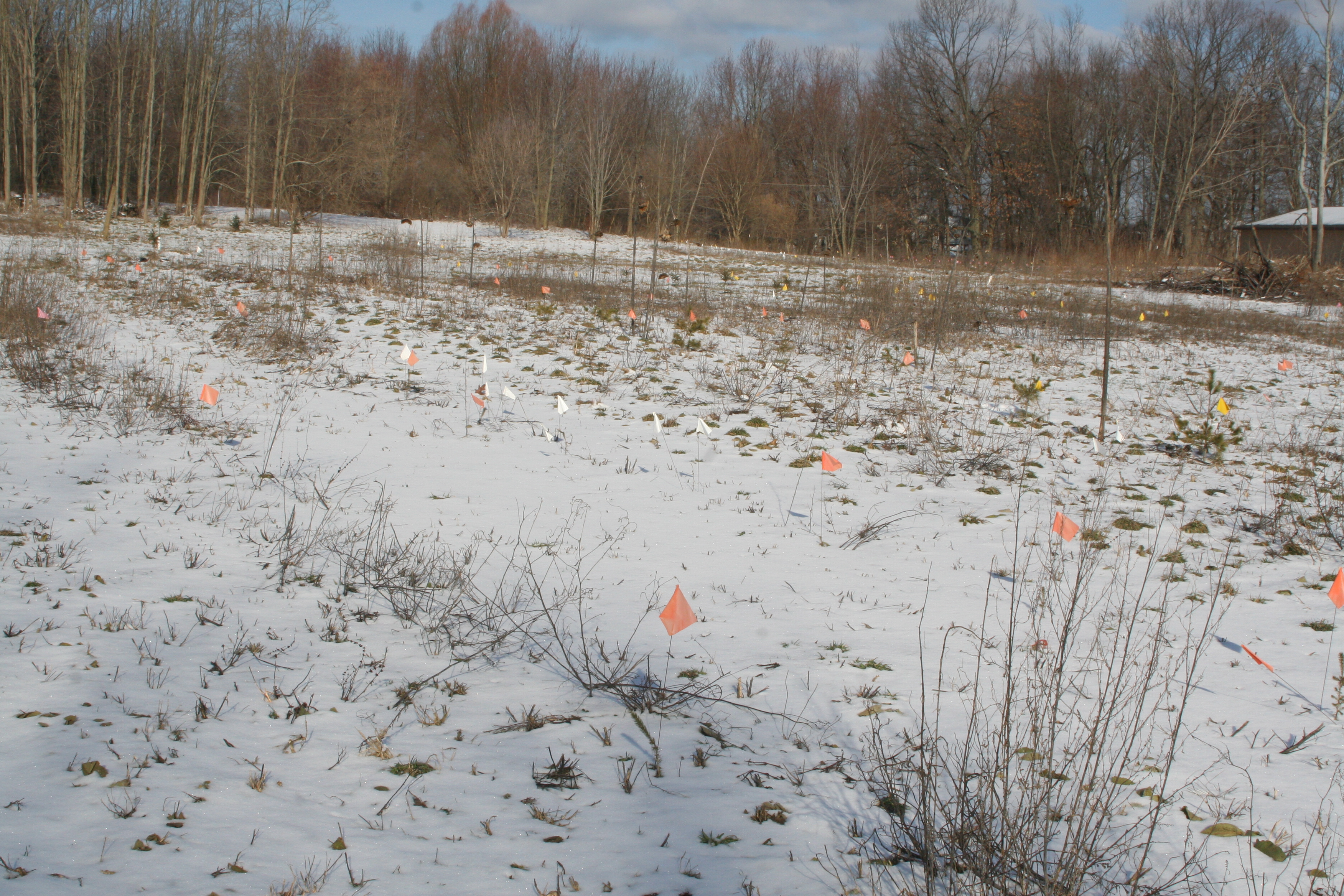
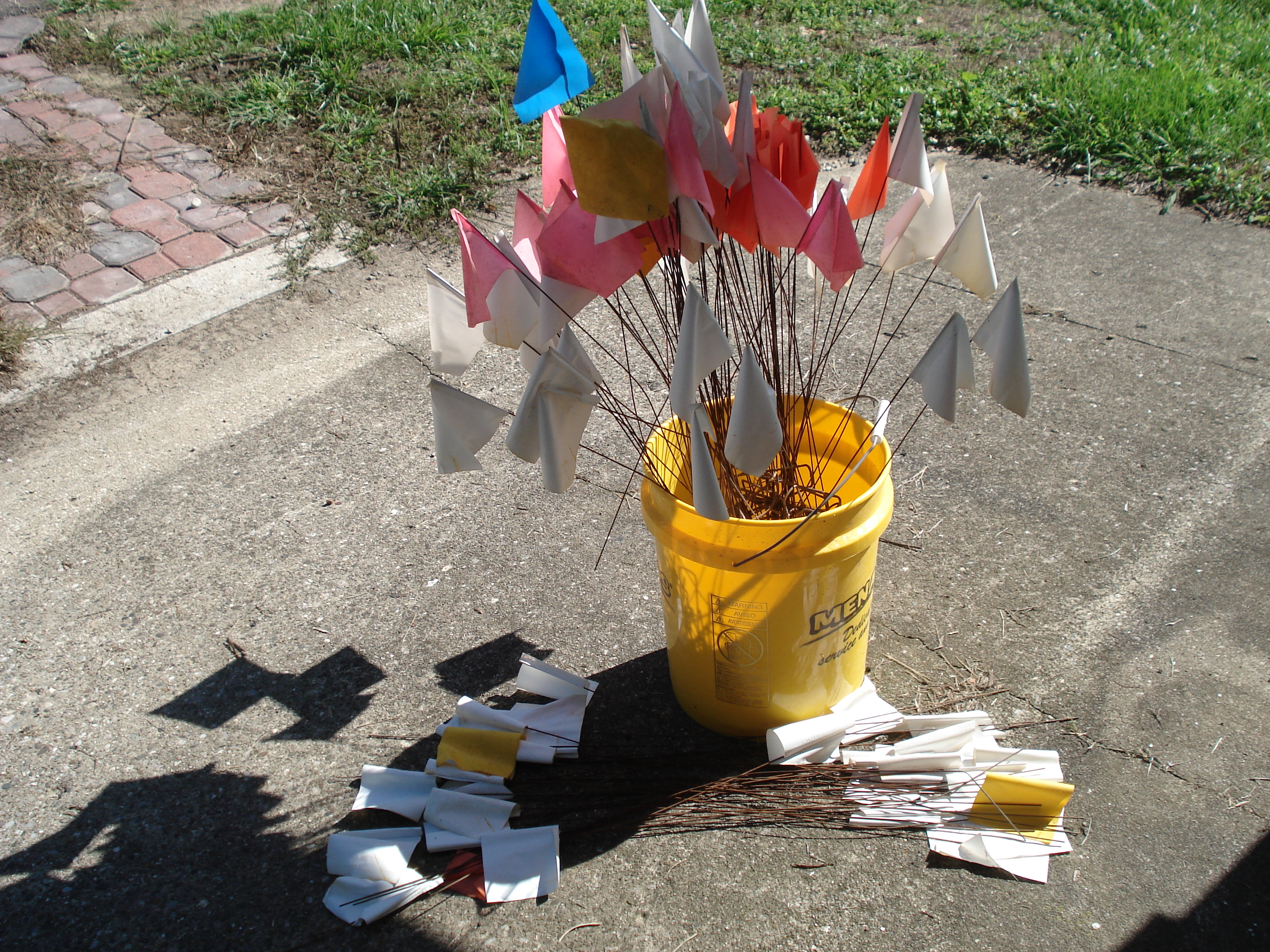
A bucket of tree flags retrieved from the Bluecircle plantings at year’s end is a reminder that success comes from advancing despite risk.  The uncertainty of the season will not prevail or block a forward path.

Markers of the fallen

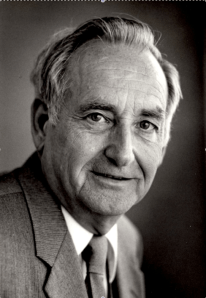
Biographical Sketch of Owen L. Myers, Middle Point, Ohio

Owen Lafayette Myers was born October 21, 1921 in Middle Point, Ohio. He was the first-born of William James Myers and Ethel Leota Dilbone, who married February 27, 1919 in Celina Ohio. Owen was named for Owen Clement Dilbone, his mother’s father, and Lafayette Myers, his father’s father.

He grew up as the 3rd-oldest of 7 siblings on a series of rented farms until 1931 when his father bought a foreclosed 80-acre farm. Owen was a successful student who enjoyed baseball,

College in Ohio

College in Ohio

basketball and listening to sports radio broadcasts and had no interest in a farming career. Following his graduation from high school in Mendon, Ohio he left home and worked at a series of jobs to support himself while enrolling at nearby Giffin College. He played on the basketball team, but soon transferred to and graduated from Findlay College in Findlay, Ohio.

With a shipmate, 1945

With a shipmate, 1945

Owen entered the U.S. Naval officer candidate-training program in 1944 and studied at Baldwin Wallace College in Ohio and then Navy Pier in Chicago. He served in the Pacific as an Ensign on a Landing Ship Transport (LST) and was involved in the Allied landings on Okinawa and Leyte Gulf. He was in Tokyo Bay at the Japanese surrender and served in Tokyo for several months thereafter.

While at Findlay College met Alliene Elizabeth Hess, who he would marry June 1, 1946 as he returned to civilian life. Owen and Alliene settled near his parents in Venedocia, Ohio and he began a management career that would last 37 years. His first position was as an office manager at the National Oil Seal Co. in Van Wert, Ohio. A son, Stephen Lee Myers was born October 19, 1948. Over the next year Owen and his father built a simple frame house in Van Wert that eventually would become his mother’s home for almost 40 years – until she was nearly 100.

The Federal Mogul Corporation acquired National Seal in 1954 and the family followed Owen’s job to relocate in suburban Detroit MI. They would move again when Owen took an assignment in Coldwater, MI in 1956. When his job returned to the Detroit offices in 1959 they bought a new house in Fraser MI, a rapidly growing north side suburb. In their first 13 years of life together the couple had moved a total of 8 times. They would remain in Fraser for 7 years before entering an even more adventuresome period of their lives.

Owen enjoyed landscaping and improving this home. In their do-it-yourself finished basement he raised tropical fish and helped his son build a series of Soap Box Derby racers. His daughter, Colletta Kay Myers was born there in 1960 and he chaired the building committee for construction of a local Methodist Church. Although he played no instruments he enjoyed his wife’s musical skills as the church organist and encouraged his children’s participation in school bands. Owen would sometimes share a favorite song or recite bits of poetry classics from his school days with the family, especially on long car trips. At heart he was probably too introverted to enjoy center stage.

In 1966 Owen was given the opportunity to relocate again and manage the company’s manufacturing and sales organizations in Argentina. Taking only what could be shipped in a few large crates Alliene, Colletta and he moved to La Plata, a city of about 100,000 people near Buenos Aires. He enjoyed the relative independence of this role but trained a capable Argentine manager, moved to Buenos Aires, and then returned to the Southfield MI offices. In the next 10 years the family would relocate 8 times as he moved between MI and management leadership assignments in Pueblo Mexico, San Pablo and Rio de Janerio Brazil and Paris. Upon his retirement in 1984 they returned to Fort Wayne, IN to be closer to his widowed mother. Owen’s daughter reflected that it was the opportunity to lead “on his own” that made this period of his career personally satisfying and successful. A parallel exists between this and the many farms and varied farm-related activities his father had pursued years before. Both expected their families and associates to “do the right thing” and follow directions, as well as a basic Protestant ethic.Owen Argentina Crop
The couple’s nomadic ways persisted in retirement, and within a few years they moved to St. Augustine, FL. While there Owen and Alliene adopted golf as their chief pastime. They spent a few summers at a golf club condominium development near Bloomington IN, but in 1990 bought a summer home in Fort Wayne IN. Owen’s mother and several of his sisters and brothers lived 50 miles away and after many years they were able to visit regularly. He made family genealogy a hobby, and succeeded in identifying many of his mother’s (Dillbone), father’s, and wife’s relatives. Owen and Alliene celebrated their 50th wedding anniversary, his mother’s 100th birthday, and his sizeable strawberry patch in this home. After returning to Fort Wayne they relied on “double-wide” or manufactured housing for their winter residences in FL, first in Port Charlotte, then Ocala, and finally in Port Saint Lucie, Fl.

By 2003 Alliene was unable to enjoy golf or drive long distances, and they made a last move to a rural mountain retirement community in Martinsburg PA. She had grown up in this area and they were able to reconnect with relatives who remained in the area. The call of warmer winters remained strong, and they spent most of their winters there. In 2005 Owen collapsed a few days after of putting up the Christmas decorations and enjoying dinner with his daughter and her family. Emergency surgery to repair his ruptured aortic aneurysm was unsuccessful and complicated by kidney damage possibly initiated by childhood diphtheria. He died a few days later at age 84

In high school Owen had memorized the following stanzas from the final act of Shakespear’s “Macbeth” that he repeated often enough to his children to etch them in family memory. Although he never forgot the wartime carnage of the Pacific in 1945 I think these stanzas were meant to remind us that, as in the play, the meaning of each life lies deeper than the simple telling of names, dates and places lived.

“Out, out, brief candle!
Life’s but a walking shadow, a poor player
That struts and frets his hour upon the stage
And then is heard no more: it is a tale
Told by an idiot, full of sound and fury,
Signifying nothing.”
Pines of the Nichols Arboretum

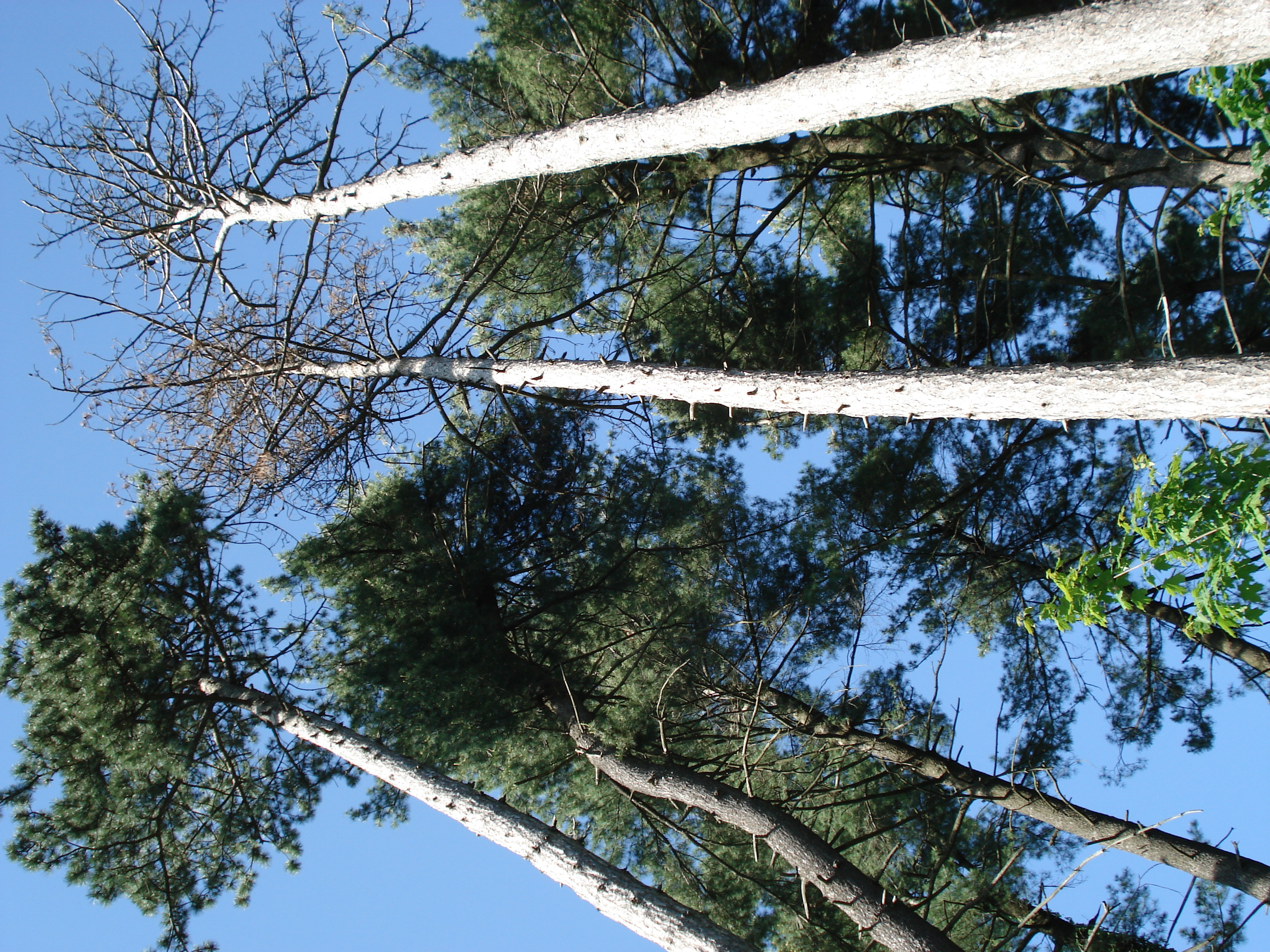
In 1907 W.H. Nichols and E.F. Nichols gave an arboretum to the University of Michigan that extends from Hill Street to the river below. Almost seventy years later a grove of stately pines on the western edge of this land provided the inspiration for the pine seedlings now finding root in the Bluecircle. A recent visit to the Nichols Arboretum showed that much has not changed with the passing of time – students still share sports on the meadows and wine, snacks and companionship in the shady nooks. The pine grove remains stately in the evening sky, albeit taller than I remembered. But after more than 100 years the pines share a lesson not evident in their (and my) youth, since a few stand only as soaring grey monuments to lives lived at the top of a hill.

Nichols Pines

Bucket of tree flags; winter ahead

The first lake-effect snow flurries are falling on the Bluecircle at the beginning of Year 3.  A bucket of flags from seedlings that failed to survive their first drought-stricken summer rests in the barn with other equipment.  Frost has started to level the weeds that will need tilled under before replanting, and soon the first real snowfall will arrive.  The ending of one year and advent of the next in the cold quiet of Michigan winters is a time for rest and consideration, for thanksgiving and moving beyond regrets.  Still, while awaiting the cleansing blanket of snow and ice there is a time of uneasiness.  A few hunters break the sunrise silence with their guns and gusts of November wind sweep the leaves and needles across the sand.

Twisting in the sun, rain and wind

After what feels like weeks of rainy days the leaves have fallen on the Bluecircle.   This brings to a close the farm’s second year, and the image of withered sunflower leaves against the autumn sky is a fitting close to the year.   It was a difficult Summer – only the late summer weeds thrived.

Paw Paw lake levels were significantly low for most of the Summer but treatment to eradicate invasive milfoil was very effective.   Water quality is better everywhere in the lake, possibly  because water circulation in shallow areas was not impeded by dense weed banks.  With falling temperatures it’s time to put away the summer tools and water toys.

A year ago tractor barn construction was in full swing.  A more ambitious reconstruction and expansion of studio and gallery space is now nearing completion on the southwest corner of the Bluecircle where it meets the Woodland Conservancy.  This project went by the filename “garage 12” because its design evolved, through a dozen iterations, from a simple 3-car garage.  Last week was devoted to grading and leveling the old orchard property line to complete the union between farm and studio land.  We hope to seed this area, weather permitting, and get a few bird-friendly shrubs started at the boundary between the nature conservancy and mowed areas.