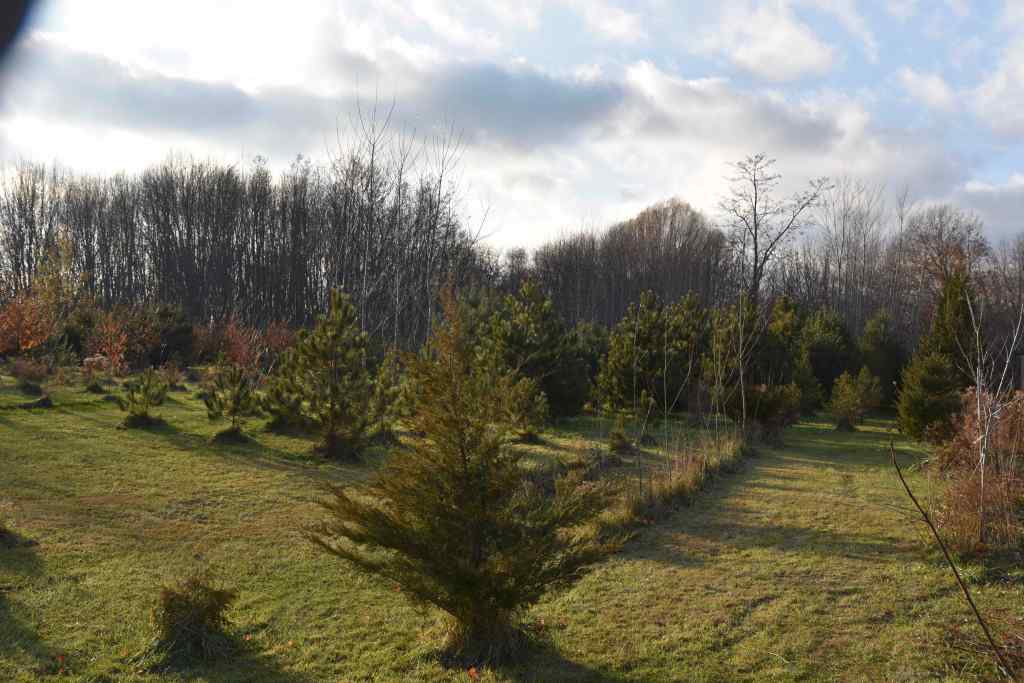
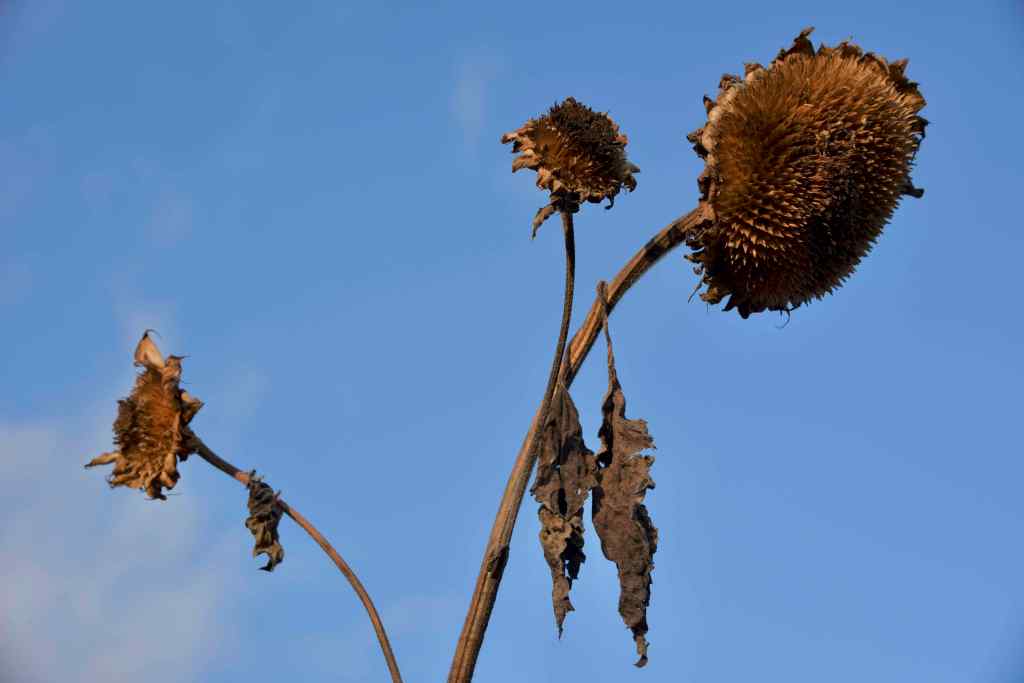
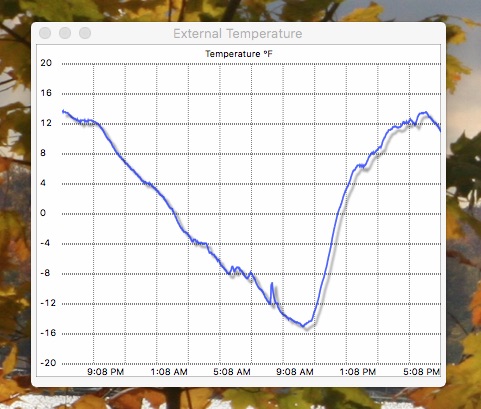
The skies cleared last night to celebrate the lunar eclipse and make way for near-record cold. The farm’s weather station at “East Paw Paw Lake” recorded 15 below after a windless night.
A single woodpecker broke the wintery silence of the morning.
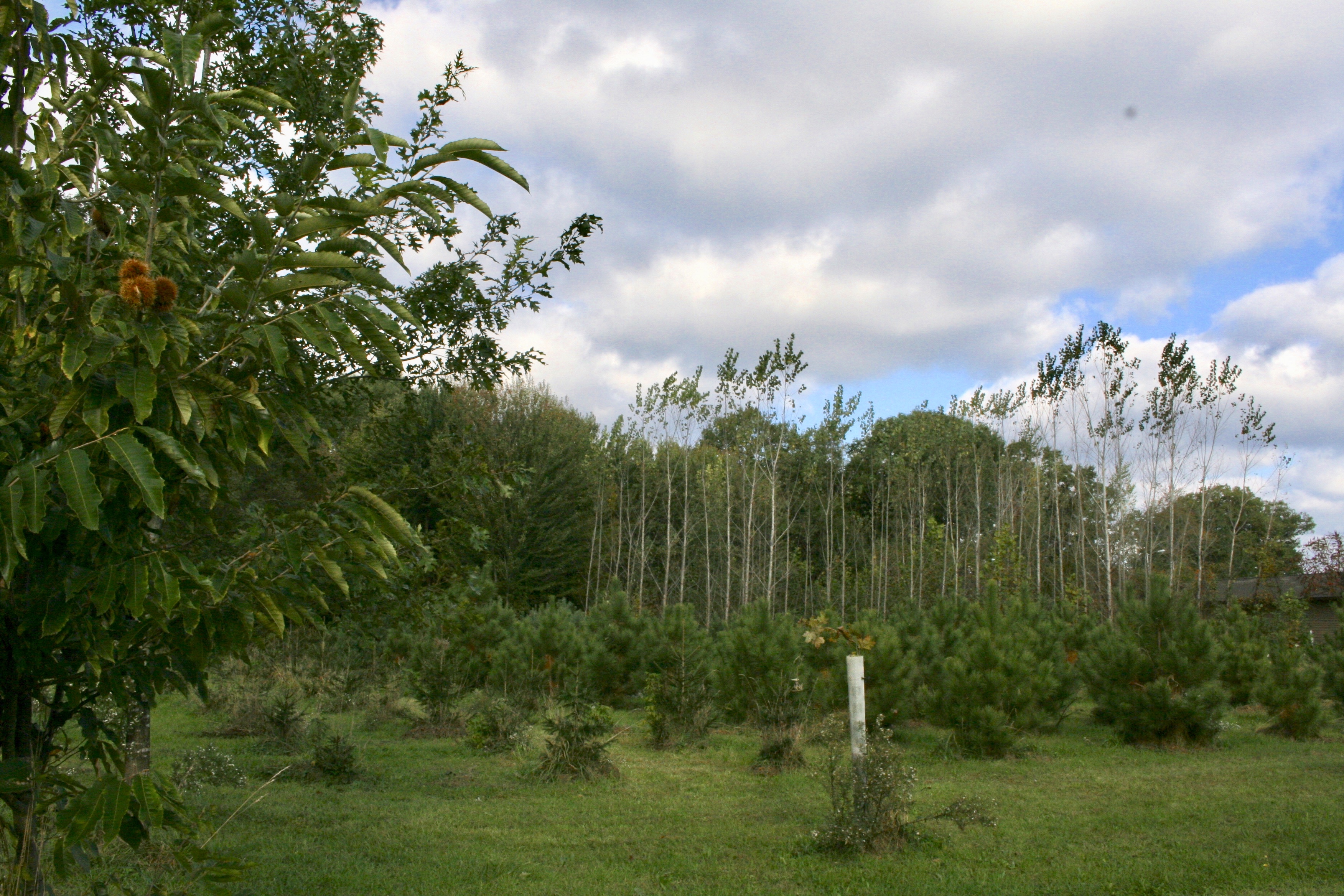
The Bluecircle has reached that age where it’s no longer a baby. The last two years have been free of drought and wind damage, so some pines, oaks and maples are reaching their “teens” in height while the poplars tower far above. 
Tulip poplars that line the pathway from N. Watervliet Road will shade it in the next year or two. At the edges black walnut trees spread by busy squirrels are slowly overtaking wild sumac and briars. With nearly 50 walnut seedlings or 7-year trees in the farm plantings the ground will soon be thick with nuts.
Red oaks produced a few dozen acorns this year, as did both the chestnuts and English walnuts. The mature white oaks had heavy loads of acorns and the local squirrel population is large, fat and fearless. 
Hickory seedlings were added this year to round out the nut menu for future wildlife. There are no picture of the BC apple orchard that has struggled. Of the original 9 seedlings only 7 are standing. Three of the founders lost their “appleness” grafts and survive only as rough peach rootstock so this year they were replaced with pot-raised transplants.
The latest addition was a small bat house over the watchtower, a platform crafted from remnants of gazebos and old lake docks.
A summer came and went after the last post here, fading like the sun over Lake Michigan in August. Soon the greens of the Bluecircle will evolve into their own annual sunset.
For the most part these have been wet, hot months. Groups of 25 new Norway spruce, sycamore and black walnut seedling have fared well and most twigs of sugar maple have also survived. Conditions were good for conifer growth so farm “anniversary” photographs a few weeks from now will show some rows of trees closed, their branches too dense for the lawn tractor to pass. This writer will not be sorry when “mow again” can be removed from the weekly agenda.
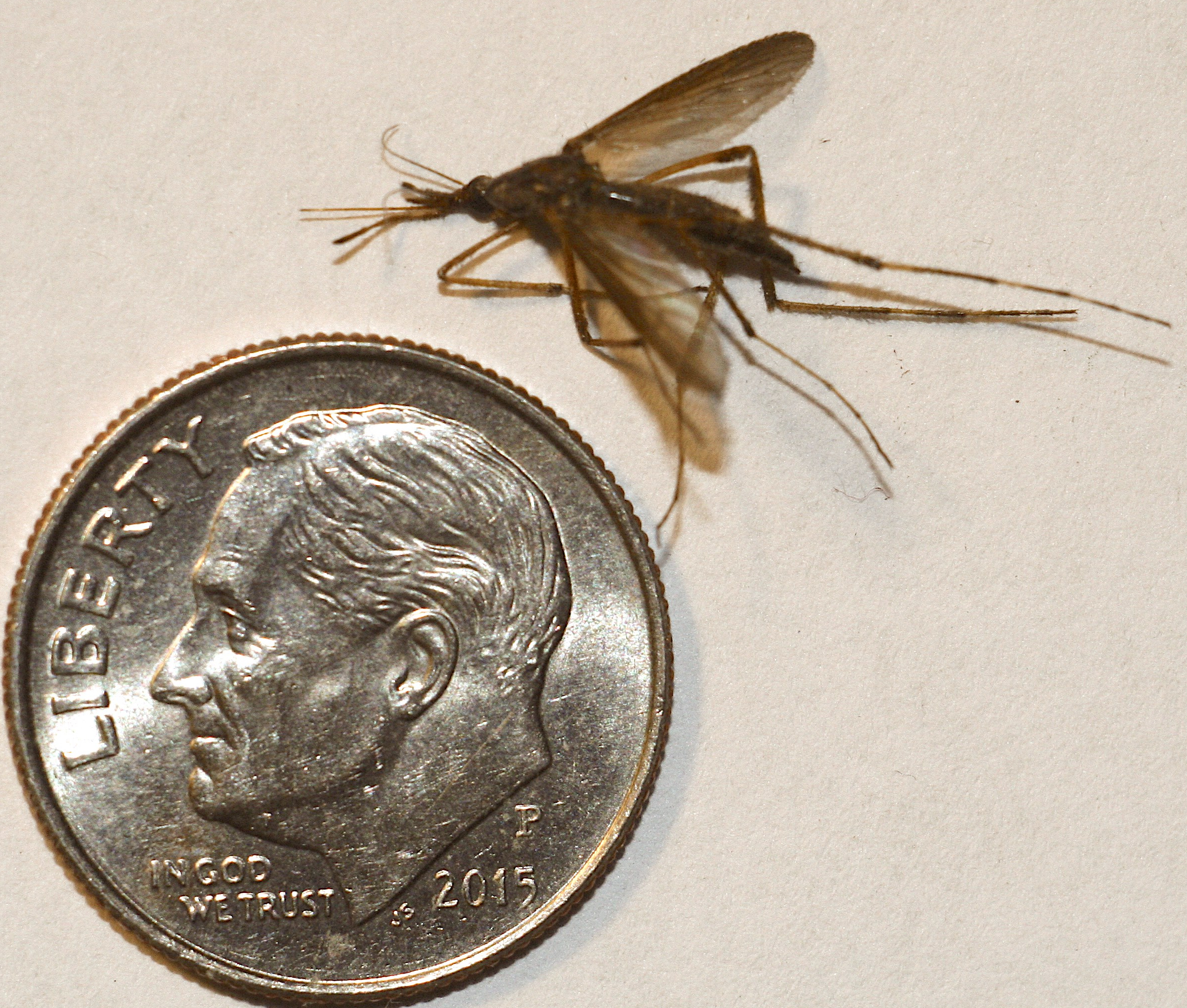
This gallinipper (psorophora ciliata) was likely a product of the plentiful rains that frequently left standing water near the lake. Fortunately these extra-large mosquitos are not as common as the tiny pests that buzz at DEET and even follow you indoors.
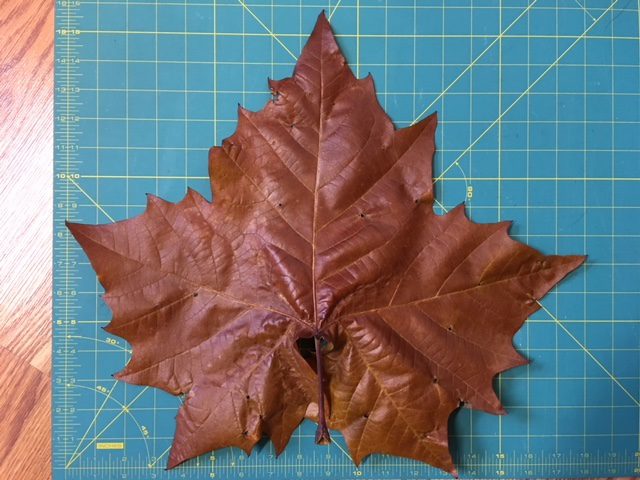
The days of falling leaves are almost over. A few stragglers remain in the poplar tops and some oaks will keep their rusty decorations till March. The treetops often hold larger leaves than lower branches and a young Burr oak provided some trophy specimens this year.
The Bluecircle leaf “grand champion” was a 5-year Sycamore that blanketed its lawn on North Watervliet Road with fallen giants. Many had a span over 12 inches, and some were larger. It was good that this naturalized area needs no raking – by Spring these enormous remnants of a good tree year will be gone.
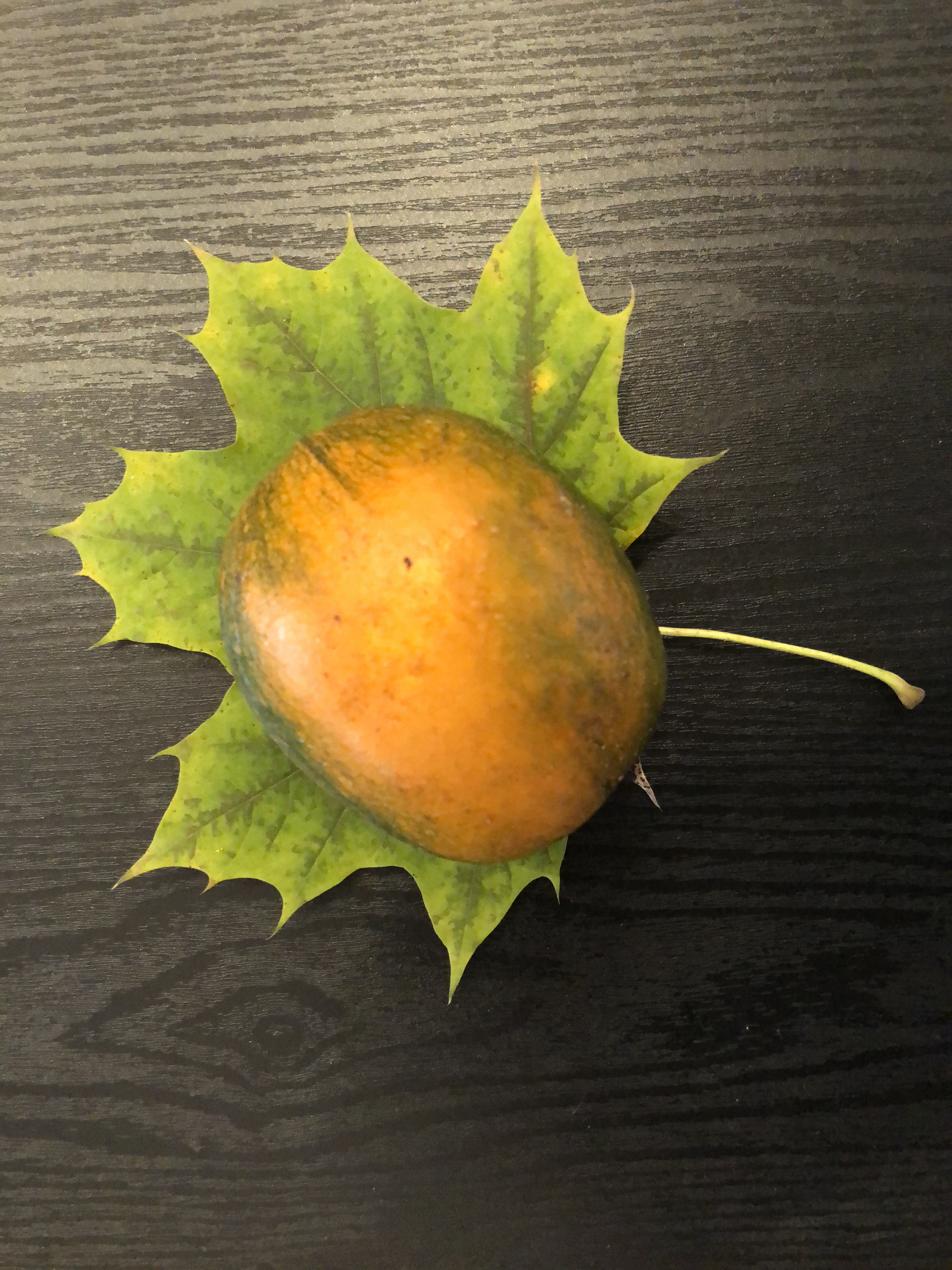
One pumpkin vine survived the groundhog chomping in the corn patch and bore a single tiny fruit. Maybe a fairy carriage?
The Red Oak leaves brown and blow on a howling Halloween and the tree farm has reached another birthday. Occasional bursts of lake-effect snow from a lead-lined sky warn of harsh weather ahead, but for now the grass is green. Freed from competition by frost-pruned weeds it’s growing thanks to lots of October rain. It will be left a little long where there are not too many leaves to mulch or move.
A rabbit, or maybe 2 elude the clutches of our resident fox by living beneath the largest Scotch Pines. Those planted as 3-year seedlings are now almost 9 years old. Volunteer raspberry and blackberry vines like the pines too, waiting to grab the sleeve or hat of the guy on the mower. Poison ivy that stealthily made its way up trunks all summer is now bright red and obvious – but only until the next hard rain sweeps the leaves away. The myth that this vine only thrives in shade is busted on the Bluecircle since it’s everywhere the mower blades don’t reach.
Spagetti squash proved to be the champion crop of this year’s garden. The pepper and tomato plants and never fully recovered from a late frost, and a groundhog that tunneled into the sweet corn/pumpkin patch feasted on the young vines. Soon it will be time to clean out the beds, hang up the tools and wait to anticipate the first signs of Spring.
Midsummer in Michigan, cooler than many years and mostly rainy enough to keep established trees healthy. The Bluecircle’s older pines now close the rows between them and briars thrive in their shade. It will be a few years before you could lose yourself here, but even now you could stay out of sight in the Scotch pines.
The mixed planting of spruce, fir and pines is susceptible to the white pine weevil. Especially in the sunniest areas this pest has infected some topmost branches leaving then brown, dead and soon broken by the wind. New
branches form below this crude amputation but the crooked trunk of affected trees marks the damage.
Both oaks and conifers continue to develop new leaves
or needles, often with transient immature colors that contrast with established growth.
Six hundred or so miles southwest of Paw Paw Lake lies Prairie Village Kansas were you can walk wagon ruts from the 200-year-old Santa Fe and linked Oregon Trails. Beyond the community park that preserves the “Prairie Highway” heritage older, well-preserved homes fill this southeast suburb of Kansas City. Only in your imagination can you see the gently rolling hills spread with prairie grasses, now dusted with a little snow or trampled by freezing rains.
This eastern terminus of the frontier trails to the West is far from the sheltering ring of the Bluecircefarm, but free of lake-effect snow drifts. Visits totaling weeks here have let Sophie establish her daily route of neighborhood inspection and nap times. But she looks longingly at her space in the back seat of the truck and will be glad to leave this one house, two dogs neighborhood.
She’ll be bringing a member of the Bluecircle family to interim residence in the guest house, widening her choice of people to love and protect. I think she’ll enjoy keeping track of a bit larger family. The orange “U” trailer behind us will be as big as the prairie schooners outfitted here in the 1820s but our journey will be shorter, and far easier.
Bright October afternoons of oak and maple leaves swirling in the wind are gone for another year. The last red raspberries and tomatoes have frosted away so only b’sprouts, tiny broccoli and milkweed pods persist in the garden beds.

A few yellowed needles drop from the Bluecircle pines but it will be many years before they make a layer of mulch under a mature canopy. On a recent hike near Gun Lake fallen needles from the tall pines decorated the still-green maples.
But now the first gusts of lake-effect snow have brought shivers to the hilltop. Bronzed leaves that evaded the mulch pile blow randomly between the trees, finding company in the piles that grow by fences and shrubs. And the sun sets low in the almost-winter sky.

A week’s camping in Wilderness State Park at the northern tip of the Lower Peninsula was highlighted by warm days, cool nights and virtually no biting bugs.
The large stands of mature red pine and hemlock in the park are linked by lightly used hiking trails and abandoned logging roads. The dune terrain is gently rolling and for the most part unblemished by public access.
At the western end of the park a peninsula of conifers, sand and gravel beds extends far into Lake Michigan and is reserved for pedestrians, birds and its native species.
Looking up into the canopy of mature pines, oaks, firs and a few maples reminded me of the future of the Bluecircle trees, a forest in its early days. 
<a
First, the beauties of mowing in midsummer include the scents of flowers and cut grass. The Queen Anne’s Lace is beginning to fade with goldenrod soon to come. The garden beds are overgrown with tomatoes ripening faster than they are needed and a few summer squash are still filling in the ground level. We’re impatient with sweet corn that isn’t quite ripe enough to pull.
And then there are the risks of the field when the weeds have grown tall. A hidden groundhog den neatly trapped the rear wheel of the Snapper mower, bottoming the deck and adding a
“tow out” break to the afternoon chores. Another good assignment for the Gator.
The pink tree flag in this picture marks a second-year maple seedling in the weeds. Just below it, and with its bottom nearly touching the ground, is a very active 10-inch hornet’s nest. The photograph fails to capture the path the lucky author used to speed away from the beasties, leaving these weeds (and the nest) to the frosts of October.