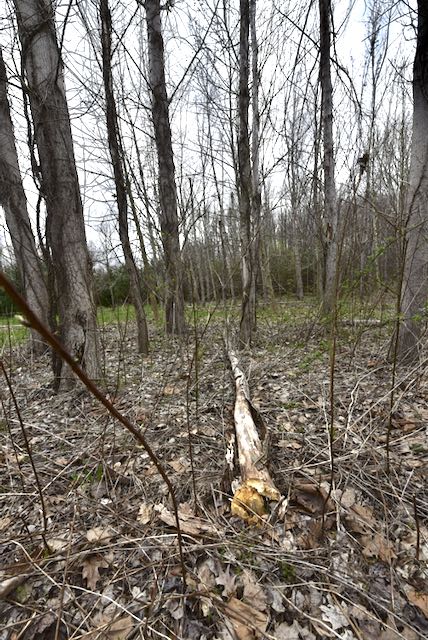
The solstice provides a little more daylight, more minutes to catch up on a post I meant to write in early Spring about the hybrid poplars. The plantings continue to evolve with some reaching more than 60 feet into the wind. Less successful specimens die off, rot at the ground and fall.
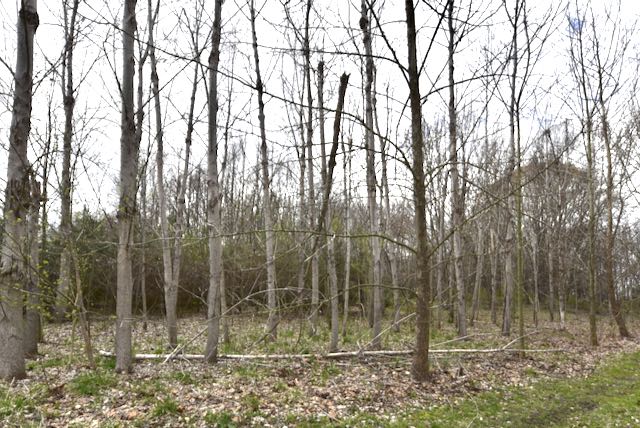
Wind-sheared tops are now becoming fairly common. This damage usually leaves more than half of the original tree intact, but growth is limited thereafter. It has become impractical to clean up debris between the planted rows so walnut and mulberry volunteers are joining in. The poplar shade is insufficient to prevent poison ivy, wild grape and black locust from adding greenery to the increasingly “naturalized” understory. Oak and pine seedlings added a few years ago are adding to the mix, but will have to survive the threat of falling poplars.
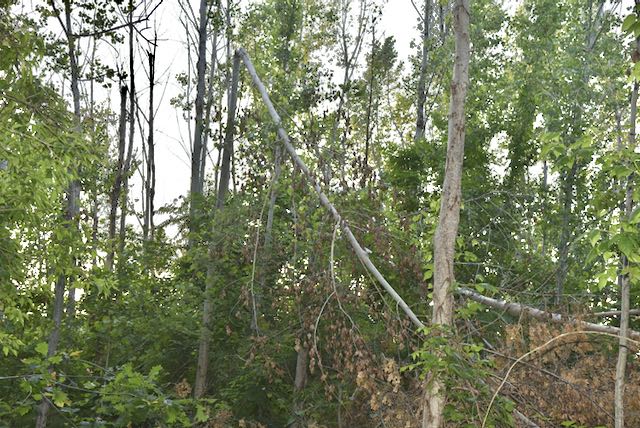
A recent storm was unusually severe and produced a domino-effect shearing of multiple poplars. In retrospect poplars in double rows of no more than 10 seedlings would have been preferable to the larger blocks I planted.
 bluecirclefarmdotcom